I met my love by the gas works wall,
Dreamed my dream by the old canal,
I kissed my girl by the factory wall,
Dirty old town, dirty old town,
This is our club belongs to you and me,
We’re United, United FC,
We may never go up, but we’ll never feel down,
Now we build our own ground,
Now we build our own ground
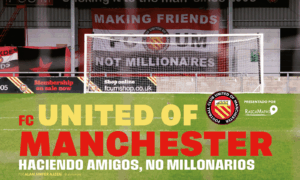
En el futbol, el común de las historias épicas se cuenta a través de los goles, cuando el héroe inesperado anota con el cronómetro agotado; otras se narran tras un trofeo que se consiguió con base en tesón y pundonor. La leyenda (no es una palabra elegida al azar o para adornar la retórica) del FC United of Manchester se fragua desde hace dos décadas en el campo con la pelota, y, sobre todo, en las gradas, en los escritorios y en las calles.
“Somos un club con una profunda base y pasión por la justicia social. Creemos que todos tienen voz y merecen ser escuchados. En cuanto a nuestra constitución, nuestras reglas, nuestra democracia, se incentiva la inclusión. Tenemos banderas que dicen ‘refugiados, bienvenidos’. Todos somos inmigrantes. Nos identificamos con todos, independientemente de su origen. Todos somos iguales. El futbol es algo especial que une a la gente”. Nick Boom, presidente del FC United of Manchester.
Viajé a Mánchester, Inglaterra, para ver y sentir el futbol más romántico, ese que se cuece a fuego lento en el llano o en las canchas de las divisiones inferiores, involucra a la comunidad desde la raíz y genera herramientas de desarrollo social desde y por la afición, para cambiar la realidad más allá de 90 minutos y lo que añada el árbitro.
En Manchester, el Balompié se respira en toda la ciudad. Ahí juegan el United y su implacable historia de caídas, tragedias y triunfos, muchos triunfos; también está el City, que, con base en petrodólares provenientes de Emiratos Árabes Unidos, se ha forjado un presente lleno de galardones. Lejos de la parafernalia de la Premier League, en la séptima división inglesa –conocida como Northern Premier League–, juega el FC United of Manchester, equipo que surgió de una revolución inesperada.
En el centro de la ciudad, a un costado de los Jardines de la Catedral, está el Museo Nacional de Futbol, donde se exhibe el origen y desarrollo del Balompié hasta el día de hoy. “Para mí hay dos tipos de aficionados, el admirador y el seguidor”, me dijo tajantemente Craig, un seguidor del FC United desde su creación, hace 20 años, mientras me mostraba orgulloso el banderín de su equipo expuesto en el museo, donde trabaja como guía. “El admirador prende la televisión o va al estadio para ver a su equipo; en cambio, el seguidor se involucra con el equipo en el día a día, somos dueños del equipo, entre todos tomamos decisiones y vemos por el bien del club, de acuerdo con nuestras tradiciones y valores”, me explicó. Craig recordó que era aficionado del Manchester United, pero desde que la familia Glazer se hizo con el 75 por ciento de las acciones del equipo en el no tan lejano 2005, se convirtió en solo un admirador. Poco antes, cuando los rumores de la compra inundaban los periódicos y la televisión, él y otros cientos de aficionados protestaron incansablemente para que no sucediera; temían que el conjunto entrara en una deuda innecesaria, se separara de sus raíces y se alejara de su gente. Aquella rebelión desencadenó una revolución epopéyica.
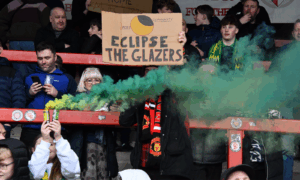
El pasado sábado 29 de marzo fue un día histórico para el FC United of Manchester: el United United Day. El resultado del partido en Broadhurst Park –casa del FC United– fue lo de menos, aunque esa tarde el equipo local cayó por la mínima diferencia frente al Stockton Town FC. Desde temprano, como todos los fines de semana, en las canchas aledañas al estadio se pueden ver a diferentes equipos locales (de niños y niñas) jugar; algunos son parte de las fuerzas básicas del equipo comunitario, otros son de áreas aledañas. Un par de horas antes del pitido inicial, frente a la entrada principal del estadio, bengalas rojo, amarillo y verde se encendieron, banderas con el rostro de Eric Cantona (no es casualidad) o el escudo del FC United y el lema “Making friends, not millionaires” (haciendo amigos, no millonarios) ondearon al son de cánticos y gritos para protestar en contra de la familia Glazer y su polémico manejo del Manchester United. Aquella protesta reunió, por primera vez, a aficionados del FC United y el grupo The 1958, fanáticos del Manchester United. Entre la gente reconocí a Nick Boom, el presidente del equipo, expectante y sonriente, y a Paul Hurst, miembro de la junta directiva; la primera impresión es que son cercanos a los aficionados, como lo mencionaron algunos seguidores con los que intercambié algunas palabras. Algunos medios, como el reconocido periódico The Guardian, llegaron para hablar con los líderes de la protesta, escuchar la conferencia de prensa previa al juego y capturar imágenes y sensaciones de los aficionados.
Como lo relata la revista inglesa Four Four Two en su edición de marzo de 2025, dos meses antes de comenzar la temporada 2005-06, la revolución tomó forma tras las innumerables protestas, persecuciones policiales y desencanto de la gente. Sentían que les arrebataron “a la mala” a su club. Alrededor de mil 500 personas se reunieron en el Teatro Apollo de Manchester para discutir y escuchar a los líderes del movimiento acerca de la creación de un nuevo equipo, con los mismos valores y tradiciones que distinguían al Manchester United antes de que la mercadotecnia y la industria del entretenimiento canibalizaran el futbol. Muchos admiradores del famoso equipo mancuniano se convirtieron en seguidores del FC United of Manchester cuando comprometieron el dinero destinado para el abono de temporada de los Red Devils para germinar las raíces del nuevo equipo. Lo registraron en la Football Association (FA), platicaron con el presidente del AFC Wimbledon –fundado tres años antes tras la compra y mudanza de su equipo original– y buscaron jugadores. Su historia comenzó en la décima división inglesa, conocida como North West Counties Division Two.
El futbol dejó de ser de la gente. Hoy, los clubes son en empresas que convirtieron la historia, las costumbres y la pasión en productos que se venden –y caro– al mejor postor. De a poco, el grito de gol se difumina y se sustituye por un cachín. La diferencia de precios entre el FC United y los Diablos Rojos es abismal, prácticamente se triplican los costos por entrada al estadio y camiseta original.
Paul Hurst, socio y uno de los cientos de fundadores, me dio la bienvenida a Broadhurst Park, me acompañó para ver el estadio antes de que comenzara el juego y me mostró orgulloso cada rincón mientras aprovechaba para tomar fotografías y videos que después subirían a las redes sociales del equipo. En cada palabra se siente el amor que tiene por su club.
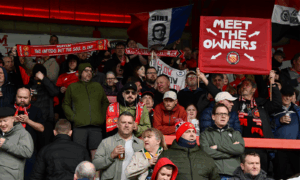
Desde antes de que comenzara el juego y hasta que el árbitro pitó el final, seguidores del FC United y The 1958 encendieron nuevamente bengalas que colorearon las gradas, el United United Day se sentía dentro del estadio. “Meet the owners” (Conozcan a los dueños), “Love United, hate sportswashing” (Ama al United, odia el sportswashing) y “Glazers Out” (Fuera los Glazer) son algunas de las consignas en las banderas y pancartas que ondeaban. La gente increpó a los Glazer con recios bramidos. El golpeteo de los pies en el suelo y los aplausos que dan ritmo a los cánticos contagiaron a los nuevos aficionados que llegaron ese día. Las canciones y la música remiten al origen.
In football, the usual epic tales are told through goals, when the unexpected hero scores as the clock runs down; others are narrated after a trophy was won based on grit and determination. The legend (not a word chosen randomly or to embellish the rhetoric) of FC United of Manchester has been forged for 20 years, on the pitch with the ball, and, above all, in the stands, in the offices, in the streets.
“We are a club with a deep base and passion for social justice. We believe everyone has a voice and deserves to be heard. Regarding our constitution, our rules, our democracy, inclusion is encouraged. We have banners that say ‘refugees, welcome’. We are all immigrants. We identify with everyone, regardless of their origin. We are all equal. Football is something special that unites people.” Nick Boom, chairman of FC United of Manchester.
I travelled to Manchester, England, to see and feel the most romantic football, the kind that simmers slowly in the lower leagues or on the pitches of the minor divisions, that involves the community from the grassroots and that generates social development tools from and for the fans, to change reality beyond 90 minutes plus stoppage time.
In Manchester, football is breathed throughout the city. Manchester United play there with their relentless history of falls, tragedies and triumphs, many triumphs; there is also Manchester City, who, based on petrodollars from the United Arab Emirates, have forged a present full of accolades. Far from the paraphernalia of the Premier League, in the seventh tier of English football (known as the Northern Premier League), FC United of Manchester plays, a team that emerged from an unexpected revolution.
In the city centre, next to the Cathedral Gardens, is the National Football Museum, where the origin and development of football up to the present day is exhibited. “For me, there are two types of fans, the admirer and the supporter,” told me emphatically Craig, a supporter of FC United of Manchester since its creation 20 years ago, while proudly showing me his team’s pennant displayed in the museum, where he works as a guide. “The admirer turns on the television or goes to the stadium to watch their team; in contrast, the supporter gets involved with the team on a daily basis, we own the team, we all make decisions and look out for the good of the club, according to our traditions and values,” he explained. Craig mentioned that he used to be a Manchester United fan but since the Glazer family took over 75% of the club’s shares in the not-so-distant 2005, he became just an admirer. Shortly before, when rumours of the team’s purchase flooded the newspapers and television, he and hundreds of other fans protested tirelessly to prevent it from happening; they feared that the club would enter unnecessary debt, become separated from its roots and move away from its people. That rebellion unleashed an epic revolution.
Last Saturday, March 29th, was a historic day for FC United of Manchester, United United Day. The result of the match at Broadhurst Park – FC United’s home ground – was the least important thing, although that afternoon the home team lost by a single goal to Stockton Town FC. From early on, like every weekend, on the pitches surrounding the stadium, you could see different local teams (boys’ and girls’) playing, some are part of the community team’s youth system, others are from neighbouring areas. The significant event occurred later, a couple of hours before kick-off, when in front of the main entrance of the stadium, red, yellow and green flares were lit, flags with the face of Eric Cantona (not a coincidence) or the FC United badge and the slogan “Making friends, not millionaires” waved to the sound of chants and shouts to protest against the Glazer family and their controversial management of Manchester United. That protest brought together fans of FC United and the group The 1958, Manchester United supporters, for the first time. Among the people I recognised Nick Boom, the team’s chairman, expectant and smiling, and Paul Hurst, a member of the board; the first impression is that they are close to the fans, precisely as mentioned by some supporters I exchanged a few words with. Some media outlets such as the renowned newspaper The Guardian arrived to speak with the protest leaders, listen to the pre-match press conference and capture images and feelings from the fans.
As the English magazine Four Four Two reported in its March 2025 edition, two months before the start of the 2005-06 season, the revolution took shape after countless protests, police pursuits and public disenchantment. They felt their club had been “taken away unfairly”. Around 1,500 people gathered at the Apollo Theatre in Manchester to discuss and listen to the leaders of the movement about the creation of a new team, with the same values and traditions that distinguished Manchester United before marketing and the entertainment industry cannibalised football. Many admirers of the famous Mancunian team became supporters of FC United of Manchester when they committed the money intended for their Red Devils season tickets to nurture the roots of the new team. They carried out the registration with the Football Association (FA), spoke with the chairman of AFC Wimbledon – founded three years earlier after the purchase and relocation of their original team – and looked for players. Their story began in the tenth tier of English football, known as the North West Counties Division Two.
Football stopped belonging to the people. Today, clubs have become companies that have turned history, customs and passion into products that are sold – and expensively – to the highest bidder. Little by little, the shout of “goal” fades and is replaced by a “ka-ching”. The price difference between FC United and the Red Devils is abysmal, practically tripling when analysing the costs per stadium entry and original shirt.
Paul Hurst, a FC United member and one of the hundreds of founders, welcomed me to Broadhurst Park, accompanied me to see the stadium before the game started, proudly showing me every corner while taking photos and videos that would later be uploaded to the team’s social media. In every word, you can feel the love he has for his club.
From before the game started until the referee blew the final whistle, supporters of FC United and The 1958 lit flares again, colouring the stands, the United United Day could be felt inside the stadium. “Meet the owners”, “Love United, hate sportswashing” and “Glazers Out” were some of the slogans on the flags and banners that waved. The people rebuked the Glazers with strong roars. The stamping of feet on the ground and the clapping that gives rhythm to the chants infected the new fans who arrived that day. The songs hark back to the origins.
I always smile when I’m at FC,
Reminds me of childhood memories,
Before the Glazers,
And Murdoch or Sky
Tears of joy running down my face,
Broadhurst Park is a special place,
This love for the club I have,
Will never die
Oh! Oh! Oh! this club is mine
Entre cantatas, los fanáticos reían porque al menos en el estadio de Moston (zona de Manchester donde está la cancha) el futbol sigue siendo una fiesta de todos para todos, aunque el marcador no sea el deseado. Niños en los hombros de sus padres, jóvenes brindando con una fría cerveza, otros con su perro atado al borde del campo. Algunos seguidores más veteranos se sentaron ataviados con su bufanda y boina, con pastel de carne en una mano y cerveza en la otra.
Al término del partido comienza el ritual popular: muchos seguidores se dirigen al mismo bar, ya sea debajo de la grada Lightbowne Road End o en la cima de la Tribuna Norte para seguir compartiendo alrededor de la pelota, de su equipo, sus anécdotas y nuevos sueños; entre ellos también están miembros de la mesa directiva actual u otras antiguas, da igual, porque todos son parte del FC United of Manchester.
Unas cervezas después, Broadhurst Park quedó vacío. La lluvia golpeaba incesantemente el techo del estadio y el olor a tierra mojada sustituyó al de cebada. En el corazón del estadio, en la grada donde antes cantaban, Nick Boom, presidente del equipo, platicó en exclusiva con Balompié.
B: ¿Cuáles son los valores en los que se cimienta FC United?
Nick Boom contestó orgulloso, sonriente.
NB: Creemos en unir a la gente, el futbol es un idioma común. De hecho, la gente empieza a conocerse y a escucharse mutuamente, lo que contribuye a una comunidad más cohesionada. Creemos que, dondequiera que estés, tengas o no padres adinerados, mereces venir y vivir el deporte en vivo. Queremos inspirar a la gente a través del poder del futbol para que sean más saludables, se muevan, se involucren con el deporte y forjen una sociedad más sana. Todo esto forma parte de lo que consideramos una responsabilidad de los clubes de futbol en su comunidad. No debería tratarse solo de ganancias, codicia, dividendos, cuánto dinero pueden ganar y cuánto poder pueden tener. Se trata de retribuir genuinamente a la comunidad, y este club está construido sobre esa base.
B: ¿Cómo funciona el equipo? ¿En verdad todos son dueños?
NB: Estamos orgullosos de nuestros grupos democráticos, donde, como saben, todos tienen voz y voto. Es decir, cada miembro tiene su voto. Esto significa que cualquiera puede proponer una resolución o una votación, podemos debatirla y luego tomamos una decisión democrática. Soy el presidente del club y un aficionado como cualquier otro; mis compañeros aficionados copropietarios, con su talento, pasión y motivación, me eligieron para la junta directiva, como a Paul –dijo Nick señalando a su colega, y continuó–; en cada decisión considero la perspectiva de un aficionado y su impacto. Siempre somos muy conscientes, nuestra primera reflexión es: ¿Qué pasa con los aficionados? ¿Cómo les afectará? Queremos que la gente pueda venir al futbol. Entonces, si los socios no están contentos con lo que hago, pueden votar para que me vaya. Se puede cambiar la administración. En la junta directiva somos accesibles, así que pasamos mucho tiempo hablando y escuchando a la gente, y si lo comparamos con, por ejemplo, el Manchester United o los clubes de primera línea, no escuchan realmente. Puede que tengan un consejo asesor porque es obligatorio, pero no se involucran ni escuchan de verdad.
–Después del partido nos reunimos para tomar una cerveza, y cualquiera puede venir a preguntarnos algo, puede contarnos cualquier cosa– añadió Paul entusiasmado.
–Lo que estamos viendo en todo el futbol, y tú lo sabrás mejor que yo, es que los dueños en realidad son oligarcas autócratas y ricos que reflejan lo que está pasando en la sociedad; cuando miras a Trump o Putin, estos hombres fuertes y armados, de derecha, están consolidando su poder para sí mismos; se trata de ganancias, avaricia y poder–, enfatizó Nick.
B: ¿Cuál es el trabajo comunitario que realizan en FC United?
NB: Tenemos a mucha gente involucrada en 30 mil horas de futbol comunitario que abarca personas con discapacidad, la salud mental, el futbol femenino. Simplemente pensamos que los clubes de futbol deberían tener una mayor conciencia social. Estamos empezando a arraigarnos en la comunidad local. Hemos aprendido que hay que colaborar con la gente, con organizaciones comunitarias y benéficas locales. Organizamos días comunitarios varias veces por temporada y decimos: ‘Esto es para ti y para mí, es para todos’ Empezamos con un grupo de personas con demencia, y resultó que venían hombres solitarios de cierta edad. No se trataba de demencia, sino de personas que probablemente perdieron a su esposa o algo por lo que vivir, y que no salen mucho; esperan con ansias unirse a un grupo. Así que es este tipo de cosas lo que atrae a la gente. No se trata de competir con otras organizaciones, lo que sucedió en cierta medida. Se trata de identificar las deficiencias y las necesidades locales. Nos esforzamos mucho por escuchar.
B: ¿Cómo trabajan con otros clubes donde los aficionados también son socios?
Señalando una bandera del otro lado de la cancha que reza “Making friends, not millionaires”, Nick contestó –Mi bandera favorita está allá y dice “haciendo amigos, no millonarios”. Eso es lo que defendemos. El otro lema oficial del club es “somos más fuertes unidos”. Parece que en el campo no podemos ganar esta batalla, pero en realidad los fanáticos tienen el poder al agruparse, ya sea con nosotros u otros clubes del Trofeo Fénix, con quienes compartimos valores y conocimientos.
–Entendiendo que la cultura en México y Latinoamérica es distinta, ¿qué le dirías a los aficionados de esas latitudes?
–Tienen que organizarse como lo haría un sindicato, y, sobre todo, que no son impotentes. Es difícil, es difícil ver cómo la gente pierde la lucha, la voluntad de pelear, pero hay que organizarse. Hay diferentes maneras de poner en evidencia a los dueños, porque lo único que no les gusta, como a Trump, es que los avergüencen o los pongan en evidencia, ¿no? Puede que no se logre el resultado final con este tipo de dueños, porque estos equipos han crecido tanto que es difícil imaginar, como en el caso del Manchester United, quién podría tomar el control si no es un fondo de inversión estadounidense o un estado-nación de Medio Oriente que hace sportswashing. Yo diría que sigan luchando, organícense, usen su voz; son poderosos. Y en última instancia, hagan el máximo sacrificio como lo hicimos nosotros y establezcan algo que valga la pena, comenzar desde abajo nuevamente y crecerlo democráticamente, que esté protegido de que alguien rico venga y lo codicie. Realmente creo que los fanáticos tienen el poder, aunque pensemos que somos impotentes, no lo somos–. Respondió Nick decisivo.
El viento frío pegaba más fuerte en la tribuna y el atardecer estaba por culminar. El bar cerró poco antes y la seguridad del estadio comenzó a presionar para que termináramos la charla, entonces Nick cerró contundente.
–Yo trabajo más de cien horas a la semana voluntariamente –. Señaló a Paul y continuó–. Él tiene un trabajo de tiempo completo y colabora más de 30 horas a la semana en el club. Lo que lo hace valioso es cuando alguien como tú llega y lo entiende, piensa que esto puede marcar la diferencia en una comunidad, en un club de futbol. Y esto podría ser en cualquier parte del mundo. Podría ser México, Irlanda, Alemania. Los clubes de futbol tienen valor social, y no creo que los gobiernos, las autoridades locales y los organismos deportivos lo comprendan. Por eso es tan importante el periodismo independiente. Personalmente, temo por lo que está pasando en el mundo. Se aprovechan de que no somos un cliente típico. Tu club de futbol es parte integral de ti, manipulan y abusan de ello, sin tener en cuenta los efectos. Los equipos no quieren a los aficionados leales que van a todos los partidos, buscan rotar a los aficionados tanto como sea posible, porque esos aficionados ocasionales, que vienen una vez por temporada, organizan una fiesta sorpresa, gastan un montón de dinero en la tienda del club (como en los deportes estadounidenses), eso es lo que pretenden.
Finalmente, Broadhurst Park apagó sus luces aquella noche. El United United Day consiguió hacer ruido y aparecer en los periódicos del día siguiente, en las redes sociales, enviando un mensaje a la industria: no es una lucha contra algún equipo en específico, es una revolución por el futbol.
Una semana después, el 5 de abril, el mítico Eric Cantona visitó nuevamente al FC United of Manchester, aportó las 25 libras esterlinas correspondientes (alrededor de $660 pesos) y firmó como nuevo socio del club, como uno más, como todos. De acuerdo con la página web del equipo, son ya 2 mil 251 copropietarios, 410 menores de edad.
Between chants, the fans laughed, because at least in the stadium in Moston (the area of Manchester where the ground is located), football remains a party for everyone, even if the score wasn’t the desired one. Children on their parents’ shoulders, young people toasting with a cold beer, others with their dog tied to the edge of the pitch. Some older supporters sat dressed in their scarf and flat cap, with a meat pie in one hand and a beer in the other.
When the match ended, the popular ritual begins: many supporters head to the same pub, either below the Lightbowne Road End stand or at the top of the North Stand to continue sharing around the ball, their team, their anecdotes and new dreams; among them are also members of the current board of directors or former ones, it doesn’t matter, because they are all part of FC United of Manchester.
A few beers later, Broadhurst Park was empty. The rain relentlessly beat against the stadium roof and the smell of wet earth replaced that of barley. In the heart of the stadium, in the stand where they had been singing before, Nick Boom, the team’s chairman, spoke exclusively with Balompié:
–What are the values on which FC United is based?
Nick Boom replied proudly, smiling –We believe in bringing people together, football is a common language. In fact, people start to get to know and listen to each other, which contributes to a more cohesive community. We believe that wherever you are, whether or not you have wealthy parents, you deserve to be able to come and experience live sport. We want to inspire people through the power of football to be healthier, to move, to get involved in sport and to forge a healthier society. All of this is part of what we consider a responsibility of football clubs in their community. It shouldn’t just be about profits, greed, dividends, how much money they can make and how much power they can have. It’s about genuinely giving back to the community, and this club is built on that foundation.
–How does the team work? Are you all really owners?
–We are proud of our democratic groups, where, as you know, everyone has a voice and a vote. That is, each member has their vote. This means that anyone can propose a resolution or a vote, we can debate it, then we make a democratic decision. I am the chairman of the club and a fan like any other, and my fellow fan co-owners, with their talent, passion and motivation, elected me to the board of directors, like Paul – said Nick, pointing to his colleague, and continued –; in every decision I consider the perspective of a fan and its impact. We are always very aware, our first thought: what about the fans? How will it affect them? We want people to be able to come to football. So, if the members are not happy with what I do, they can vote me out. The management can be changed. On the board of directors, we are accessible, so we spend a lot of time talking and listening to people, and if you compare it to, for example, Manchester United or top-tier clubs, they don’t really listen. They may have an advisory board because it’s mandatory, but they don’t really get involved or listen.
–After the match, we get together for a beer, and anyone can come and ask us anything, they can tell us anything – added Paul enthusiastically.
–What we are seeing throughout football, and you will know this better than me, is that the owners are actually autocratic and wealthy oligarchs who reflect what is happening in society; when you look at Trump or Putin, these strong, armed, right-wing men are consolidating their power for themselves; it’s about profits, greed and power – Nick emphasised.
–What community work does FC United do?
–We have a lot of people involved in 30,000 hours of community football that includes people with disabilities, mental health, women’s football. We simply think that football clubs should have a greater social awareness. We are starting to take root in the local community. We have learned that you must collaborate with people, with local community and charitable organisations. We organise community days several times a season and say, “This is for you and for me, it’s for everyone.” We started with a group of people with dementia, and it turned out that lonely older men were coming. It wasn’t about dementia, but about people who had probably lost their wives or something to live for, and who don’t go out much; they look forward to joining a group. So, it’s this kind of thing that attracts people. It’s not about competing with other organisations, which happened to some extent. It’s about identifying local shortcomings and needs. We make a great effort to listen.
–How do you work with other clubs where the fans are also members?
Pointing to a banner on the other side of the pitch, Nick replied –My favourite banner is over there, and it says, “making friends, not millionaires”. That’s what we stand for. The other official motto of the club is “we are stronger united”. It seems that on the pitch we can’t win this battle, but in reality, the fans have the power, and by grouping together, whether with us or other Fenix Trophy clubs, with whom we share values and knowledge.
–Understanding that the culture in Mexico and Latin America is different, what would you say to the fans in Mexico?
–They have to organise, like a trade union would, and, above all, that they are not powerless. It’s difficult, it’s difficult to see how people lose the fight, the will to fight, but you must organise. There are different ways to expose the owners, because the only thing they don’t like, like Trump, is being embarrassed or exposed, right? The result may not be achieved with these types of owners, because these teams have grown so much that it’s hard to imagine, as in the case of Manchester United, who could take control if it’s not an investment fund or a Middle Eastern nation-state that does sportswashing. I would say keep fighting, organise, use your voice; you are powerful. And ultimately, make the ultimate sacrifice as we did and establish something worthwhile, start from the bottom again and grow it democratically, so that it is protected from someone rich coming along and coveting it. I really believe that the fans have the power, even if we think we are powerless, we are not – Nick replied decisively.
The cold wind blew harder in the stand and dusk was about to fall. The bar closed shortly before and the stadium security began to push us to finish the chat, then Nick concluded emphatically.
–I work over a hundred hours a week voluntarily –, he pointed to Paul and continued –he has a full-time job and contributes over 30 hours a week to the club. What makes it valuable is when someone like you comes along and understands it, thinks that this can make a difference in a community, in a football club. And this could be anywhere in the world, couldn’t it? It could be Mexico, Ireland, Germany. Football clubs have social value, and I don’t think governments, local authorities and sports bodies understand that. That’s why independent journalism is so important. Personally, I fear what is happening in the world. They take advantage of the fact that we are not a typical customer. Your football club is an integral part of you, they manipulate and abuse it, without considering the effects. Teams don’t want loyal fans who go to every match, they want to rotate fans as much as possible, because those occasional fans who come once a season, organise a surprise party, spend a lot of money in the club shop (like in American sports), that’s what they aim for.
Finally, Broadhurst Park turned off its lights that night. United United Day managed to make noise and appear in the following day’s newspapers and on social media, sending a message to the industry; it is not a fight against any specific team, it is a revolution for football.
A week later, on April 5th, the legendary Eric Cantona visited FC United of Manchester again, contributed his £25 (around $660 Mexican pesos) and signed as a new member of the club, just like anyone else, like everyone else. According to the team’s website, there are already 2,251 co-owners, 410 of whom are under 18.
Won’t pay Glazer or work for Sky,
We still sing city’s gonna die,
2 United’s but the soul is 1,
As the busby babes carry on
Toda historia tiene distintos puntos de vista. A lo largo de un recorrido por Old Trafford, el imponente estadio del Manchester United, platiqué con Jason Leach, un apasionado de los Diablos Rojos que trabaja en el equipo de sus amores desde hace más de 20 años haciendo recorridos y moderando encuentros con leyendas del conjunto mancuniano.
Para él, cuando el futbol comienza y ve a sus jugadores vistiendo de rojo, blanco y negro, se olvida de que trabaja para el Manchester United, es un aficionado. “Aunque siempre haya controversia y cosas sucediendo, amenazas de quiebra y adquisiciones, aprendí de mi padre que cuando eliges tu equipo, nunca lo cambias. No importa qué pase. Cuando ocurrió la adquisición y se formó el FC United, me peleé un poco con dos amigos que conocía del colegio, pero aquí estamos. No importa quién esté al mando, es mi equipo”, dijo con brillo en los ojos. Escucharlo contar la historia del Manchester United en el museo de Old Trafford es un agasajo, contagia emoción y nostalgia.
Le pregunté por su sentir hacia el FC United y contestó sin dudar: “Mis sentimientos por el FC United siempre han sido los mismos. Es un club que surgió porque algunos aficionados del Manchester United decidieron que ya no podían apoyarlo. Lo entiendo. En mi caso, amo demasiado al United. No encontré nada que me impidiera ir a Old Trafford. Y me alegro mucho de haberlo hecho. Me alegro mucho de haber dicho que no, que me quedo con mi equipo. Nunca los he visto jugar, creo que me gustaría mucho. Les deseo lo mejor porque son gente de Manchester. Y muchos de ellos, con los años, han encontrado la manera de seguir viendo a los Diablos Rojos por televisión, pero van al estadio a apoyar a su equipo. Lo sé porque hablo con muchos de ellos. Algunos incluso van a ambos estadios. Con el paso del tiempo se ha producido una especie de polinización cruzada. No les deseo nada malo en absoluto y espero que les vaya bien”.
Every story has many points of view. During a tour of the “Theatre of Dreams”, Old Trafford, Manchester United’s impressive stadium, I spoke with Jason Leach, a passionate Red Devils fan who has worked for his beloved team for over 20 years, giving tours and moderating meetings with legends of the Mancunian club.
For him, when the football starts and he sees his players wearing red, white and black, he forgets that he works for Manchester United, he’s a fan. “Although there’s always controversy and there are always things happening, bankruptcy threats and takeovers, I learned from my dad that when you choose your team, you never change. No matter what happens. When the takeover happened and FC United was formed, I had a bit of a falling out with two mates I knew from school, but here we are. It doesn’t matter who’s in charge, it’s my team,” he said with a sparkle in his eyes. Listening to him tell the story of Manchester United in the Old Trafford Museum is a treat, it conveys emotion and nostalgia.
I asked him about his feelings towards FC United and he replied without hesitation: “My feelings for FC United have always been the same. It’s a club that arose because some Manchester United fans decided they couldn’t support it anymore. I understand that. In my case, I love United too much. I didn’t find anything that stopped me from going to Old Trafford. And I’m really glad I did. I’m really glad I said no, I’m sticking with my team. I’ve never seen them play, I think I’d really like to. I wish them all the best because they are Manchester people. And many of them, over the years, have found a way to keep watching the Red Devils on television, but they go to the stadium to support their team. I know because I speak to many of them. Some even go to both grounds. Over time, there’s been a kind of cross-pollination. I don’t wish them any ill will at all, and I hope they do well.”
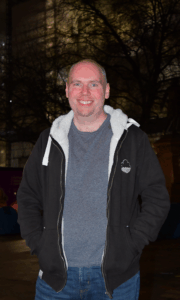
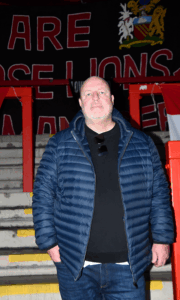 Nick Boom
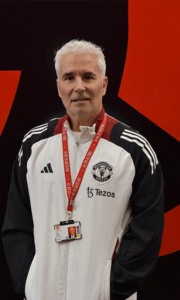
 Paul Hurst
 Jason Leach
El TROFEO FÉNIX torneo internacional pionero, concebido y organizado por el club de fútbol Brera FC, con sede en Milán, Italia. Comenzó en 2021 con clubes europeos no profesionales (cada uno asociado a una organización benéfica), seleccionados por su excepcional singularidad social, histórica y cultural; en muchos equipos los aficionados son socios. Hay clubes de países como Italia, Serbia, Inglaterra, Gales, Escocia, República Checa, Bélgica, Alemania, Polonia, Finlandia, Noruega. El torneo puede seguirse en vivo en su canal de YouTube. La competición cuenta con la aprobación de la UEFA.
Hasta ahora, FC United of Manchester es el club con más títulos, pero la esencia del torneo radica en el sentido comunitario de sus participantes, generando emociones desde la raíz. El Balompié de la gente para la gente.
Campeones:
- Temporada 2021-2022: FC United of Manchester (Inglaterra) 2-0 Prague Raptors FC (República Checa).
- Temporada 2022-2023: La final se llevó a cabo en el mítico estadio de San Siro, Milán. BK Skjold (Dinamarca) 3-0 Prague Raptors FC.
- Temporada 2023-2024: FC United of Manchester 4-0 Prague Raptors FC.
- Temporada 2024-2025: Caledonian Braves (Escocia) 3-1 FC United of Manchester. *Actualizado al 12 de mayo de 2025.
THE PHOENIX TROPHY is a pioneering international tournament, conceived and organised by Brera FC, a football club based in Milan, Italy. It began in 2021 with non-professional European clubs (each associated with a non-profit organisation), selected for their exceptional social, historical, and cultural uniqueness; in many teams, the fans are members. There are clubs from countries such as Italy, Serbia, England, Wales, Scotland, Czech Republic, Belgium, Germany, Poland, Finland, and Norway. The tournament can be followed live on its YouTube channel. The competition has the approval of UEFA.
So far, FC United of Manchester is the club with the most titles, but the essence of the tournament lies in the community spirit of its participants, generating emotions from the grassroots. Football by the people for the people.
Champions:
- 2021-2022 Season: FC United of Manchester (England) 2-0 Prague Raptors FC (Czech Republic).
- 2022-2023 Season: The final was held at the mythical San Siro stadium, Milan. BK Skjold (Denmark) 3-0 Prague Raptors FC.
- 2023-2024 Season: FC United of Manchester 4-0 Prague Raptors FC.
- 2024-2025 Season: Caledonian Braves (Scotland) 3-1 FC United of Manchester.
*Updated as of May 12, 2025.