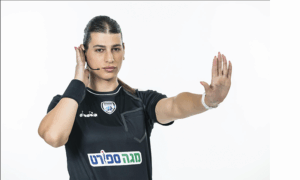
Sapir sale al campo con la mirada centrada en el balón que lleva en la mano derecha. Va escoltada, primero, por dos mujeres quienes también visten uniforme negro; cerca del corazón, en su camiseta contrasta el parche que reza “UEFA Match Official”. Tras ellas, desfilan veintidós jugadoras, las de Irlanda del Norte ataviadas en camisetas verdes, las de Montenegro portan camisolas rojas. No es un partido cualquiera, al menos no para Sapir ni la historia del Balompié mundial.
Esta historia no va del juego en particular, aunque el primer tiempo fue muy emocionante. En Balompié platicamos con Sapir Gaya Berman porque hizo historia: es la primera árbitra transgénero en un partido oficial de la UEFA, pero su historia va mucho más allá de un titular sensacionalista.
El futbol es de y para cualquier persona, permite construir puentes, ser catalizador social… al menos en la teoría, de a poco también en la práctica. La historia de Sapir cobra vital importancia en el contexto internacional que vive la industria del “juego más bonito del mundo”, donde se ha normalizado la violencia como en muy pocos otros espacios que concentran masas, y como ejemplo en México, el deplorable grito homofóbico que es denostativo en sí mismo.
–¿Cómo te enamoraste del futbol? –Le pregunté para romper el hielo. Aún no terminaba la pregunta y ya podía ver que se le iluminaba la mirada.
–Para mí, el futbol siempre ha sido una parte enorme de mi vida. Desde niña amo el juego; no solo jugar, sino entenderlo, sentir el futbol. Empecé a jugar a la edad de cinco en un club pequeño, como defensora central, unos años después el entrenador me dijo que fuera lateral derecha, pero la posición principal que me encantaba jugar era defensa central. Crecí en una familia amante del futbol. Decidí dejarlo cuando tenía dieciséis al darme cuenta de que no era lo suficientemente buena. No logré mi sueño de llegar a la Liga Premier Israelí como jugadora, estrechar la mano del presidente en la final de la Copa o ser una jugadora de talla mundial. Estuve inactiva durante seis meses sin deportes, estaba frustrada con la situación. Esa edad es complicada, pero encontré otra forma de darle vida al sueño a través del arbitraje. Cuando empecé a arbitrar, me di cuenta de que era algo que realmente disfrutaba, que lo sentía dentro de mí, y con el tiempo se convirtió en mi pasión. Arbitrar me fascina porque se trata de control, disciplina y tomar decisiones difíciles bajo presión.
–Sapir, ¿por qué ser árbitra?
–La decisión de ser árbitra provino del entendimiento de que un árbitro es un atleta. Ser entrenador o ser comentarista es quedarse fuera del campo y estar de pie o enseñar, no sé cómo explicarlo, pero no eres parte del juego. Ser árbitra es ser parte del juego. Tienes mucho impacto en los jugadores o en los aficionados, necesitas tomar una decisión, muchas veces decisiones críticas. Me gusta mostrar las tarjetas amarillas o rojas, o usar el silbato y hablar con los jugadores; sé cómo lidiar con la situación, ser honesta, ser la persona que no toma partido. Me gusta ser justa para los jugadores, sé que no me llevaré trofeos, pero me encanta estar en el campo. Amo el futbol y por eso elegí ser árbitra.
En los primeros días de marzo de 2025, días antes del debut como árbitra internacional, se estrenó el documental Sapir en el Festival de Cine Judío de Atlanta, donde cuenta su historia desde pequeña y cómo vivió el complejo proceso de la cirugía de reasignación de género y la terapia hormonal, al tiempo que equilibra las exigencias físicas, emocionales y psicológicas del arbitraje de futbol de primera división. En el filme se muestra a Sapir dialogando con un jugador antes pitar un partido, ahí le menciona que años antes ella lo “adquirió” en el videojuego “FIFA” para utilizarlo en su equipo; también se ve vistiendo una camiseta del AC Milán.
–¿Quiénes eran tus ídolos cuando eras niña?
–Increíble –, dice sonriendo, como si reviviera aquella época, y continúa– De niña, cuando jugaba “FIFA” o “Pro Evolution” en una PlayStation, me gustaba jugar con el AC Milán y el Bayern de Múnich. Mis dos modelos a seguir eran Carles Puyol y el segundo sorprende a algunas personas cuando lo menciono… Bastian Schweinsteiger, porque era un jugador muy inteligente, muy fuerte, pero también era un caballero. Puyol es un capitán de barco, ya sabes. Entiende cómo guiarte y centrarte en la meta principal; es el líder que necesita un equipo. Crecí viendo a Messi, Cristiano Ronaldo y Neymar, es obvio amarlos, pero para mí, Carles Puyol y Bastian Schweinsteiger fueron diferentes; un delantero que realmente amaba eran Filippo Inzaghi. Simplemente recordar a este jugador que amaba, me hace tan feliz.
–Cuando decidiste ser árbitra, ¿tuviste algún modelo a seguir?
–Sí, mi modelo a seguir vino de Israel, no conocía un modelo a seguir en la televisión o fuera de Israel. Para mí, eran Meir Levy, Eitan Tabrizi o Alon Yefet, son los mejores árbitros que conocía en ese momento. Estos son los árbitros que vi y dije “¡guau!, un día quiero estar en ese lugar como árbitra, ser televisada y ser una mujer en el centro del campo con el silbato y tomar todas las decisiones como ellos.
–¿Qué reglas dirías que son más fáciles y complicadas de aplicar para ti?
–Es una pregunta muy interesante porque creo que la decisión fácil es, ya sabes, una falta pequeña, un saque de banda obvio, un saque de esquina o un saque de meta. Es muy fácil tomar la decisión porque no hay una gran influencia, un gran impacto en el marcador. Sube la dificultad cuando es una tarjeta amarilla, y las más complicadas son los penaltis o una tarjeta roja porque impactan el resultado. Me encanta tener una conversación con los jugadores, mostrarles que estoy para ellos también.
–En ese sentido, entendiendo que los árbitros también se equivocan y que probablemente tengas una respuesta oficial porque perteneces a la Asociación de Futbol de Israel, ¿qué opinión tienes del VAR?
–Sé que si un jugador habla conmigo no se trata de mis decisiones. Es… es superficial, ¿sabes? Proviene de otra cosa, del marcador, de fallar en alguna jugada o de algo más. Si un jugador muestra discrepancia con mi decisión es una línea roja. Debe respetar mi decisión. Debe respetarme, debe respetar el juego. Respetar las reglas del juego. Respetar a todos. Así que necesito hacer la diferencia entre frustrado y disconforme. Así trabajo. Llego al campo con mucho respeto por el entrenador, respeto por el jugador, respeto por la audiencia. Todos. Y cuando muestro todo este respeto, lo recibo de vuelta. Absolutamente –. Hace una breve pausa para tomar aire y continúa para hablar directamente del VAR– es realmente mi opinión. Estamos en 2025. La tecnología está en todo lo que nos rodea, a tu lado, sobre ti, encima de ti, no importa. Así que creo que la tecnología debe ser parte del futbol también. Me encanta el VAR, hace que los errores salgan del campo. El futbol le pertenece a la gente, y a la gente le gustan las emociones y lo auténtico. Tienes que ser lo suficientemente inteligente para entender que se trata de combinar tecnología y personalidad, y esa es la receta perfecta. Esta es mi opinión.
–Volviendo al documental, hay una escena que capturó especialmente mi atención: mientras te maquillabas sonaba de fondo al narrador presentando en hebreo un partido entre Hapoel Haifa y Hapoel Hedera, y tú como árbitra central. Al tiempo que te aplicas base en polvo, diferentes voces se escuchan: “¡Sapir, despierta!”, “Es maravillosa, desearía que hubiera más árbitros como ella”, “No le importan nada, pita lo que ve, no se deja afectar por la afición o las bancas”, “En cuanto a definir a hombres y mujeres, creo que una madre y un padre son suficientes; no hay necesidad parejas padre-padre o madre-madre. Pero como árbitra, es excepcional”. ¿Qué emociones te provoca eso?
Con semblante serio y mirada reflexiva responde amablemente –Hubo mezcla de reacciones sobre mi transición, algunas personas me apoyaron desde el primer día, otras se tomaron su tiempo para adaptarse; si a mí me tomó 26 años, me di cuenta de que otras personas necesitan tiempo. Mi equipo arbitral, mis entrenadores y colegas fueron muy profesionales y respetuosos conmigo. Entiendo que a algunas personas les costara trabajo entender el paso que di en mi vida, pero, y es un gran “pero”–, pausa su respuesta por unos segundos y continúa– respeto cada paso de otras personas en su vida, y está bien, pueden hacer lo que quieran en su vida. Es lo que hice yo. Así que, si es demasiado difícil entender lo que hice en mi vida, tómate un día, dos semanas, meses, pero durante este período, respétame. Respeta mis decisiones. No tienen que ser mis mejores amigos, pero necesitan entender que es mi vida. Primero que nada, lo hice por mí –. Cerró contundentemente la idea. Visiblemente más relajada y sonriente extendió su respuesta. –El mayor desafío probablemente fueron los fans del futbol. Creo que con el tiempo la gente vio que yo era la misma árbitra, la misma profesional, haciendo el mismo trabajo y no importa lo que pasó en mi vida personal. Esto lo hice por mí. No hace ninguna diferencia en el campo, me siento la misma árbitra con las mismas decisiones, con la misma comunicación y sonrisa. Me siento conectada a mi corazón, me siento tan bien con la decisión que tomé en mi vida. Hay algunos ruidos de fondo, pero lo dejo allí. Me concentro en mi objetivo, y funciona.
–Me alegro mucho Sapir. En ese sentido, sabes que en el futbol a nivel mundial la violencia está muy normalizada lamentablemente. No me imagino a un compañero de equipo gritándome “¡eres un idiota!”. En el Balompié pasa indistintamente, aficionados, jugadores, entrenadores y especialmente a árbitros. Vi en el documental que a veces te hablan como hombre y te veo riendo, tu reacción me llamó la atención –Reflexioné buscando involucrarla. Ella sonrió perspicaz.
–Es una reflexión inteligente, y tienes razón. Tienes razón porque como árbitra necesitas ser tan fuerte y concentrarte en tu misión, ignorar por completo el ruido que te rodea. Si escuchara lo que piden, dicen, gritan, o te maldicen, te vuelves loca. Te vuelves loca. ¡Guau! ¡Guau! La multitud insulta a cualquier árbitro con la misma imprecación, así que para mí no importa si utilizan términos homofóbicos o si insultan a mi familia; lo principal es ser una buena persona, ser una buena mujer y ser una buena árbitra. Así que puedes decir lo que quieras decir, si no es una buena retroalimentación, no importa. Quiero decir que las personas que me apoyan, mi familia, mi esposa Bar, son la razón por la que tengo fuerza día tras día, semana tras semana, sábado tras sábado para mantenerme en pie y sentirme tan orgullosa, fuerte y entender cuál es la razón principal por la que salgo al estadio o me paro en el campo rodeada de veinte, treinta o cinco mil personas –. Orgullosa, con un tono de voz alegre sigue– Esto es un trabajo. Soy parte del futbol israelí, el mayor entretenimiento en Israel, entender que soy parte del juego, y ahora soy una árbitra internacional. Así que quiero dar las gracias a mi familia, dar las gracias a Bar, es mi mayor apoyo.
Las gradas del estadio Seaview en Belfast, Irlanda del Norte, lucen prácticamente vacías. Sapir Gaya Berman, sonriente, realiza el volado que define quién realiza el saque inaugural de lo que podría ser un juego decisivo en la Clasificación de la UEFA femenina sub-17. Sapir pita el inicio del partido el 17 de marzo de 2025 en punto de las 17:30 horas.
–Sapir, ¿cómo te sentiste en Belfast arbitrando tu primer partido internacional entre Irlanda del Norte y Montenegro?
–¡Guau! Fue emocionante, abrumador. Lo sentí en todo mi cuerpo. Me sentí increíble. Trabajé tan duro para llegar a este nivel. Corrí mucho, trabajé muy duro. Después de que comencé a tomar hormonas mi cuerpo cambió, y sólo hasta después de dos años comencé a equilibrarme. No estaba pensando en ser la primera mujer transgénero. Solo estaba pensando en el partido, en arbitrarlo bien. Hacer bien mi trabajo es más importante para mí porque es solo el comienzo. Después del partido caí en cuenta. Recuerdo que llegué al hotel, y miré al cielo oscuro, era de noche. Fue la prueba de que, si trabajas duro y crees en ti misma, puedes llegar a cualquier lugar incluso aquellos no imaginados. Soñé con esta situación y ahora es parte de mi vida. Así que, hacer historia es perfecto, pero es para el libro. Para mí, para mi corazón, para mi estómago, para mi mente, es continuar, partido tras partido, nombramiento tras nombramiento, subir y subir.
–¿Cuál es tu siguiente meta?
–Primero la Liga de Campeones Femenina, una semifinal, la final. Es mi gran sueño ser designada para ese partido, sería maravilloso. La Copa del Mundo, arbitrar en la Copa del Mundo o en los Juegos Olímpicos. Ahora quiero centrarme solo en la liga femenil a la que siento que pertenezco, de la que siento que soy parte de mi sueño. Estos son mis sueños ahora, tal vez en el futuro en el varonil.
–La atmósfera en el estadio en un partido varonil y femenil es muy diferente. ¿Es lo mismo para ti?
–No me malinterpretes. Quiero ser muy clara. Las mujeres le dan a este mundo algo diferente, más tranquilidad, sentido de comodidad… con los hombres es diferente. Es muy difícil de explicar, pero cuando arbitro hombres aquí en Israel, y después voy a arbitrar un partido femenino internacional, hay algunas cuestiones diferentes en el campo como la conversación, la disidencia, son diferentes. Así que creo que necesitamos cambiar nuestra mentalidad y hacer una combinación. Dejar que chicas y chicos jueguen juntos. Hay muchas cosas buenas que hacer una combinación entre los géneros.
–¿Cómo cambió tu vida como árbitra una vez que eres ahora una árbitra internacional? ¿Es diferente incluso cómo ahora te acercas al partido?
–Tengo más confianza. Después de hacer un curso de la UEFA en Atenas, terminé la prueba médica, muchas pruebas de juego y prueba de inglés, me sentí muy orgullosa y segura. También tengo una gran responsabilidad. Ahora la pelota está en mi mano. Quiero demostrar que este ascenso es merecido y que estoy en el lugar correcto.
–Tengo dos nombres en mente, Stéphanie Frappart, la primera mujer en pitar un partido varonil de la Copa Mundial, y Meitar Shemesh con quien te vi platicar amablemente en el documental y que capturó mi atención cuando mencionó el impacto de tu transición en su carrera como árbitra.
–Empezaré con la más fácil. Stéphanie Frappart. Es maravillosa. Es una árbitra muy inteligente, realmente me gusta verla. La conocí hace tres meses y le dije que ella es mi modelo a seguir, me abrazó y me dio algunas palabras positivas. Es increíble. Quiero ser designada para los partidos que ella consigue, quiero lograrlo. Esto me conecta con el segundo nombre, Meitar es mi amiga, pero ella decidió romper la relación entre nosotras; con ella hablé mucho, antes y durante mi transición, sobre mis sueños, y ella nunca me lo había dicho antes. De repente toda su verdad salió, en el documental, que es genial, cortan mi respuesta y tengo una pregunta como contestación. ¿Por qué hay un solo lugar para nosotras? Debería estar abierto para cualquiera, sin importar nada. Y necesitamos estar juntas. Yo soy mujer, tú eres mujer. Nos merecemos que haya dos o más lugares para mujeres. No soy su enemiga. Quienes decidieron que sólo hubiera un lugar para mujeres fue la Asociación de Futbol. En diferentes esferas hay hombres fuertes, por encima de nosotras, ellos agitan la caja y nos enfrentamos entre nosotras mientras ellos se sientan y disfrutan. Se trata de entender que tenemos el poder de cambiar el mundo, de cambiar la forma en que vivimos, esto es lo más importante. Esta es la forma de romper el cristal, el techo.
–¿Consideras que tienes algún papel como mujer transgénero en un mundo del futbol dominado por hombres?
–Me veo a mí misma como alguien que sigue su verdad y trabaja duro para lograr lo que quiere. Es eso lo que impresiona a otros, especialmente a los jóvenes trans que aman los deportes, pero que no se ven representados. También sigo aprendiendo como cualquier otra persona a lo largo de su vida. Ser una modelo a seguir, para una mujer trans, un hombre trans, para la comunidad LGBTQ+, es mostrarles que es posible ser quien quieras ser.
El contexto político y social derivó en la última e ineludible pregunta.
–Entendiendo que no eres el gobierno, pero sí formas parte de la Asociación de Futbol de Israel, ¿qué opinión tienes del conflicto derivado del ataque terrorista de Hamas del 7 de octubre de 2023 y el genocidio de palestinos perpetrado por el gobierno de Israel?
–Entiendo de dónde viene, no estamos en otro mundo. Necesitamos decir algo al respecto porque la guerra es mala para ambas partes, sobre todo para los civiles. Nosotros sufrimos y ellos sufren. En mi opinión, el futbol siempre ha sido un lugar donde personas de diferentes orígenes se unen. Y como árbitro, mi enfoque es la equidad y la profesionalidad en el campo. Por supuesto, como todos en Israel, soy consciente de los desafíos que enfrenta nuestra sociedad, y estos tiempos no son fáciles para nadie. Es un desastre, y afecta a todos de diferentes maneras. En mi opinión, tenemos que detenerlo. Tenemos que detenerlo. Es difícil imaginar lo que sucede dentro de Gaza. No quiero imaginarme a las familias, a los niños. Es un desastre. Quiero vivir en un mundo que se respete mutuamente, que vivamos en paz. El futbol tiene el poder de unir. Como árbitra, hago lo que puedo hacer en el campo.
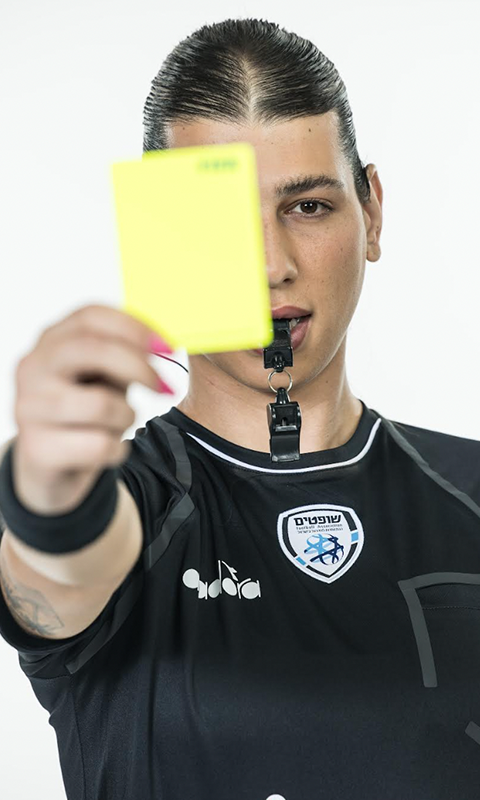
El deporte en general, pero el Balompié especialmente es un lenguaje universal que sólo necesita una pelota y alguien que juegue, nada más. Sapir Gaya Berman, sin querer, persiguiendo sus sueños, está rompiendo el techo. Al final, en el Estadio Seaview de Belfast, la selección sub-17 de Montenegro derrotó a Irlanda del Norte por marcador de 2-1; Sapir sólo mostró una tarjeta amarilla.
Sapir walks onto the pitch, her gaze fixed on the ball in her right hand. She’s escorted, first, by two women also in black uniforms; near their hearts, a “UEFA Match Official” patch stands out on their shirts. Behind them, twenty-two players parade out, Northern Ireland’s in green shirts, Montenegro’s in red. This isn’t just any match, at least not for Sapir or the history of global football.
This story isn’t about the game itself, although the first half was thrilling. At Balompié, we chatted with Sapir Gaya Berman because she made history: she’s the first transgender referee in an official UEFA match. But her story goes far beyond a sensationalist headline.
Football is for everyone, it builds bridges, acts as a social catalyst… at least in theory, and gradually, in practice too. Sapir’s story is vitally important in the current international context of “the beautiful game,” where violence has become normalised in a way few other mass-gatherings experience. A prime example in Mexico is the deplorable, inherently denigrating homophobic chant.
“How did you fall in love with football?” I asked, to break the ice. Before I’d even finished the question, I could see her eyes light up.
“For me, football has always been a massive part of my life. I’ve loved the game since I was a child; not just playing, but understanding it, feeling it. I started playing at five in a small club, as a centre-back. A few years later, the coach told me to play right-back, but the main position I absolutely loved playing was centre-back. I grew up in a football-mad family. I decided to stop when I was sixteen when I realised I wasn’t good enough. I didn’t achieve my dream of reaching the Israeli Premier League as a player, shaking the president’s hand in the Cup final, or being a world-class player. I was inactive for six months, no sport at all; I was so frustrated with the situation. That age is tricky, but I found another way to bring the dream to life through refereeing. When I started officiating, I realised it was something I truly enjoyed, that I felt it deep inside me, and over time it became my passion. Refereeing fascinates me because it’s all about control, discipline, and making tough decisions under pressure.”
“Sapir, why be a referee?”
“The decision to be a referee came from understanding that a referee is an athlete. Being a coach or a commentator means staying off the pitch, standing or teaching – I don’t know how to explain it – but you’re not part of the game. Being a referee means being part of the game. You have a lot of impact on the players or the fans, you need to make decisions, often critical decisions. I like showing yellow or red card or using the whistle and talking to players; I know how to handle the situation, to be honest, to be the person who doesn’t take sides. I like being fair to the players. I know I won’t win trophies, but I love being on the pitch. I love football, and that’s why I chose to be a referee.”
In early March 2025, days before her international refereeing debut, the documentary ‘Sapir’ premiered at the Atlanta Jewish Film Festival. It tells her story from childhood, detailing her complex journey through gender reassignment surgery and hormone therapy, all while balancing the physical, emotional, and psychological demands of top-flight football refereeing. The film shows Sapir chatting with a player before blowing the whistle for a match, mentioning she “bought” him years ago in the FIFA video game for her team. She’s also seen wearing an AC Milan shirt.
“Who were your idols when you were a kid?”
“Incredible,” she says, smiling as if reliving that time, and continues, “As a kid, when I played FIFA or Pro Evolution on a PlayStation, I loved playing with AC Milan and Bayern Munich. My two role models were Carles Puyol, and the second one surprises some people when I mention him… Bastian Schweinsteiger, because he was a very intelligent player, very strong, but also a gentleman. Puyol is a ship’s captain, you know. He understands how to guide you and keep you focused on the main goal; he’s the leader a team needs. I grew up watching Messi, Cristiano Ronaldo, and Neymar – it’s obvious to love them – but for me, Carles Puyol and Bastian Schweinsteiger were different. A striker I truly loved was Filippo Inzaghi. Just remembering that player I loved makes me so happy.”
“When you decided to be a referee, did you have any role models?”
“Yes, my role models came from Israel; I didn’t know a role model on TV or outside of Israel. For me, it was Meir Levy, Eitan Tabrizi, or Alon Yefet. They were the best referees I knew at the time. These are the referees I saw and said ‘wow, one day I want to be in that position as a referee, to be televised and be a woman in the middle of the pitch with the whistle, making all the decisions like them.'”
“Which rules would you say are easier and more complicated for you to apply?”
“That’s a really interesting question because I think the easy decisions are, you know, a small foul, an obvious throw-in, a corner kick, or a goal kick. It’s very easy to make the decision because there’s no major influence, no big impact on the score. The difficulty goes up with a yellow card, and the most complicated are penalties or a red card because they impact the result. I love having a conversation with the players, showing them I’m there for them too.”
“In that sense, understanding that referees also make mistakes and that you probably have an official response because you belong to the Israeli Football Association, what’s your opinion on VAR?”
“I know that if a player talks to me, it’s not about my decisions. It’s… it’s superficial, you know? It comes from something else, from the score, from missing a play, or something else. If a player shows disagreement with my decision, that’s a red line. They must respect my decision. They must respect me; they must respect the game. Respect the rules of the game. Respect everyone. So, I need to differentiate between frustration and disagreement. That’s how I work. I come onto the pitch with a lot of respect for the coach, respect for the player, respect for the audience. Everyone. And when I show all this respect, I get it back. Absolutely.” She pauses briefly to catch her breath and continues, speaking directly about VAR: “It’s genuinely my opinion. We’re in 2025. Technology is all around us – beside you, above you, on top of you, it doesn’t matter. So, I believe technology must be part of football too. I love VAR; it takes errors out of the game. Football belongs to the people, and people like emotions and authenticity. You must be smart enough to understand that it’s about combining technology and personality, and that’s the perfect recipe. This is my opinion.”
“Going back to the documentary, there’s a scene that particularly caught my attention: while you were putting on make-up, a narrator was introducing a match between Hapoel Haifa and Hapoel Hedera in Hebrew, with you as the central referee. As you apply powder in your face, different voices are heard: ‘Sapir, wake up!’, ‘She’s wonderful, I wish there were more referees like her,’ ‘She doesn’t care about anything, she blows what she sees, she’s not affected by the fans or the benches,’ ‘As for defining men and women, I think a mother and a father are enough; there’s no need for father-father or mother-mother couples. But as a referee, she’s exceptional.’ What emotions does that bring up for you?”
With a serious expression and a thoughtful gaze, she responds kindly, “There was a mix of reactions about my transition. Some people supported me from day one, others took their time to adapt. If it took me 26 years, I realised other people need time. My refereeing team, my coaches, and colleagues were very professional and respectful towards me. I understand it was difficult for some people to grasp the step I took in my life, but – and it’s a big ‘but’ –” she pauses her response for a few seconds and continues, “I respect every step other people take in their lives, and that’s fine; they can do whatever they want in their lives. That’s what I did. So, if it’s too difficult to understand what I did in my life, take a day, two weeks, months, but during this period, respect me. Respect my decisions. You don’t have to be best friends, but you need to understand it’s my life. First and foremost, I did it for me.” She concludes the idea emphatically. Visibly more relaxed and smiling, she extends her answer: “The biggest challenge was probably the football fans. I think over time people saw that I was the same referee, the same professional, doing the same job, and it doesn’t matter what happened in my personal life. I did this for me. It makes no difference on the pitch; I feel like the same referee with the same decisions, with the same communication and smile. I feel connected to my heart; I feel so good about the decision I made in my life. There’s some background noise, but I leave it there. I focus on my goal, and it works.”
“I’m so glad, Sapir. In that sense, you know that violence in global football is sadly very normalised. I can’t imagine a teammate shouting, ‘you’re an idiot!’ at me. In football, it happens to everyone indiscriminately – fans, players, coaches, and especially referees. I saw in the documentary that sometimes they address you as a man, and I saw you laughing; your reaction caught my attention,” I reflected, trying to engage her. She smiled shrewdly.
“That’s a smart reflection, and you’re right. You’re right because as a referee, you need to be so strong and focused on your mission, completely ignoring the noise around you. If you listened to what they demand, say, shout, or curse at you, you’d go mad. You’d go mad! Wow! Wow! The crowd insults any referee with the same imprecation, so for me it doesn’t matter if they use homophobic terms or if they insult my family; the main thing is to be a good person, to be a good woman, and to be a good referee. So, you can say whatever you want to say; if it’s not good feedback, it doesn’t matter. I want to say that the people who support me, my family, my wife Bar, are the reason I have strength day after day, week after week, Saturday after Saturday, to stay standing and feel so proud, strong, and understand the main reason I go out to the stadium or stand on the pitch surrounded by twenty, thirty, or five thousand people.” Proudly, with a cheerful tone of voice, she continues, “This is a job. I’m part of Israeli football, the biggest entertainment in Israel, to understand that I’m part of the game, and now I’m an international referee. So, I want to thank my family, thank Bar, she’s my biggest support.”
The stands at Seaview Stadium in Belfast, Northern Ireland, are practically empty. Sapir Gaya Berman, smiling, performs the coin toss that decides who takes the opening kick-off of what could be a decisive game in the UEFA Women’s U-17 Qualifiers. Sapir blows the whistle to start the match at 5:30 PM on March 17, 2025.
“Sapir, how did you feel in Belfast refereeing your first international match between Northern Ireland and Montenegro?”
“Wow! It was exhilarating, overwhelming. I felt it throughout my entire body. I felt incredible. I worked so hard to reach this level. I ran a lot, worked incredibly hard. After I started taking hormones, my body changed, and it was only after two years that I started to find balance. I wasn’t thinking about being the first transgender woman. I was just thinking about the match, about refereeing it well. Doing my job well is more important to me because it’s only the beginning. After the match, it dawned on me. I remember arriving at the hotel and looking at the dark sky; it was night. It was proof that if you work hard and believe in yourself, you can get anywhere, even places you never imagined. I dreamed of this situation, and now it’s part of my life. So, making history is perfect, but it’s for the record books. For me, for my heart, for my gut, for my mind, it’s about continuing, match after match, appointment after appointment, rising higher and higher.”
“What’s your next goal?”
“First, the Women’s Champions League, a semi-final, the final. It’s my big dream to be appointed for that match; it would be wonderful. The World Cup, refereeing at the World Cup or the Olympic Games. Now I want to focus solely on the women’s league, which I feel I belong to. These are my dreams now, perhaps in the future, the men’s game.”
“The atmosphere in the stadium at a men’s and women’s match is very different. Is it the same for you?”
“Don’t get me wrong. I want to be very clear. Women give this world something different, more tranquillity, a sense of comfort… with men it’s different. It’s very difficult to explain, but when I referee men here in Israel, and then I go to referee an international women’s match, there are some different issues on the pitch like conversation, dissent, they are different. So, I think we need to change our mentality and make a combination. Let girls and boys play together. There are many good things that come from combining genders.”
“How has your life as a referee changed now that you’re an international referee? Is it even different how you approach the match now?”
“I have more confidence. After doing a UEFA course in Athens, completing the medical test, many practical game tests, and an English test, I felt very proud and secure. I also have a great responsibility. Now the ball is in my hand. I want to show that this promotion is deserved and that I’m in the right place.”
“I have two names in mind: Stéphanie Frappart, the first woman to referee a men’s World Cup match, and Meitar Shemesh, with whom I saw you chatting amiably in the documentary, and who caught my attention when she mentioned the impact of your transition on her refereeing career.”
“I’ll start with the easier one. Stéphanie Frappart. She’s wonderful. She’s a very intelligent referee; I really like watching her. I met her three months ago and told her she’s my role model. She hugged me and gave me some positive words. She’s incredible. I want to be appointed for the matches she gets; I want to achieve that. This connects me to the second name, Meitar is my friend, but she decided to break off our relationship; I talked a lot with her, before and during my transition, about my dreams, and she had never told me this before. Suddenly all her truth came out, in the documentary, which is great, they cut my answer, and I have a question as a reply. Why is there only one place for us? It should be open for anyone, no matter what. And we need to be together. I am a woman; you are a woman. We deserve there to be two or more places for women. I’m not her enemy. Those who decided there was only one place for women were the Football Association. In different spheres, there are strong men, above us, they shake the box, and we confront each other while they sit back and enjoy. It’s about understanding that we have the power to change the world, to change the way we live; this is the most important thing. This is the way to break the glass, the ceiling.”
“Do you believe you have a role as a transgender woman in a male-dominated football world?”
“I see myself as someone who follows her truth and works hard to achieve what she wants. That’s what impresses others, especially young trans people who love sports but don’t see themselves represented. I also continue to learn like anyone else throughout their life. Being a role model, for a trans woman, a trans man, for the LGBTQ+ community, is to show them that it’s possible to be whoever you want to be.”
The political and social context led to the final, unavoidable question.
“Understanding that you’re not the government, but you are part of the Israeli Football Association, what’s your opinion on the conflict stemming from the Hamas terrorist attack of October 7, 2023, and the genocide of Palestinians perpetrated by the Israeli government?”
“I understand where it comes from; we’re not in another world. We need to say something about it because war is bad for both sides, especially for civilians. We suffer and they suffer. In my opinion, football has always been a place where people from different backgrounds come together. And as a referee, my focus is fairness and professionalism on the pitch. Of course, like everyone in Israel, I’m aware of the challenges our society faces, and these times are not easy for anyone. It’s a disaster, and it affects everyone in different ways. In my opinion, we must stop it. We must stop it. It’s hard to imagine what’s happening inside Gaza. I don’t want to imagine the families, the children. It’s a disaster. I want to live in a world that respects each other, where we live in peace. Football has the power to unite. As a referee, I do what I can do on the pitch.”
Sport in general, but football especially, is a universal language that only needs a ball and someone to play – nothing more. Sapir Gaya Berman, unintentionally, by pursuing her dreams, is breaking the ceiling. In the end, at Seaview Stadium in Belfast, Montenegro’s U-17 team defeated Northern Ireland 2-1; Sapir only showed one yellow card.