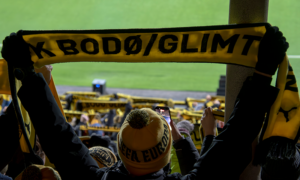
Siente orgullo de tu país
Primero somos del norte de Noruega
Y Nordland es nuestro condado
Y Bodø es nuestra ciudad
Y cuando estamos en el estadio
Entonces lo damos todo
Un amor por el club
Y de dónde venimos
Olé olé olé å, Olé olé olé
Olé olé olé å, Olé olé olé
Vær stolt av kor du e fra
Førr Nord-Norge e vi
Og Nordland e vårt fylke
Og Bodø e vår by
Og når vi e på stadion
Så gir vi alt vi har
En kjærlighet te klubben
Og kor vi e i fra
Olè olè olè å, Olè olè olè,
Olè olè olè å, Olè olè olè
We are from Northern Norway
And Nordland is our county
And Bodø is our city
And when we are at the stadium
We give everything we have
A love for the club
And where we are from
Olè olè olè å, Olè olè olè,
Olè olè olè å, Olè olè olè
¡Bodø destella!
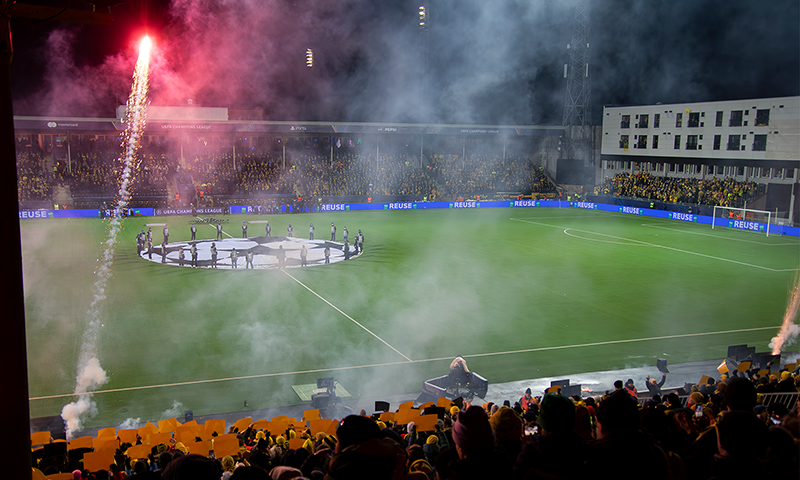
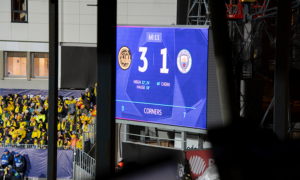
Noche de Champions League. Kasper Høgh recupera en el centro del campo y alarga la pelota con un toque hacia Blomberg quien corre enjundioso hacia el área contraria. Son dos contra dos. La gente revolotea en las tribunas, ilusionados con lo improbable. El cronómetro marca veinte minutos. Khusanov derriba al atacante con una carga al hombro. El “9” amarillo espera atento. Blomberg se levanta rápidamente y finta que va a la izquierda; centra elevado al otro lado. La parábola alarga el instante, afónico, agónico. Høgh, sin ángulo, cabecea picado. El balón se cuela entre las piernas del arquero. ¡Gol! Poco más de ocho mil doscientas almas estallan en el atiborrado Aspmyra Stadion. ¡Bodø/Glimt está venciendo al Manchester City!
En el absurdo futbol moderno que prioriza billetes verdes, y que convierte a los aficionados en clientes desechables, aún hay historias románticas que encantan porque desafían al sistema, aunque a veces, muy pocas, conquisten trofeos resplandecientes. El destello del FK Bodø/Glimt germina en el corazón de su comunidad e ilumina la ciudad porteña al norte del Círculo Polar Ártico.
Lunes por la tarde.
–Parece que se podrán ver las auroras boreales en Bodø esta noche –dijo el reportero noruego en la conferencia de prensa previa al juego de la penúltima jornada de la fase de liga de la Champions League.
–¡Bien! –respondió Pep Guardiola interrumpiéndolo, esbozando una sonrisa.
–Es algo especial y espectacular para muchos turistas, ¿dijiste que estuviste en Lofoten? –preguntó el reportero– ¿las has visto antes?
–Sí, en Lofoten y en Finlandia. Me encanta el norte europeo –afirmó Pep.
–¿Qué piensas al respecto? –volvió el reportero
Con una sonrisa juguetona Pep reviró. –No soy científico para analizar por qué aparecen en el cielo, dame algunos años… no subestimes mi conocimiento como científico, pero por ahora solo las admiro, aún mejor si es con una copa de vino.
–¿Tienes tiempo para apreciar las auroras boreales con un calendario tan apretado como el de Champions League?
–Estaré en el hotel, a través de los ventanales miraré el cielo y las disfrutaré. Estoy muy concentrado en mi trabajo, pero por qué no verlas y admirar la belleza del universo. –aseguró el entrenador del conjunto visitante.
–Es el viento solar que choca con el gas en la atmósfera superior. Eso es. –concluyó el reportero.
–Ah, ¿sí? Tú eres el científico –dijo Guardiola entre risas.
Lunes por la noche. La naturaleza no se equivoca. El gélido viento invernal pegó, como de costumbre, en Bodø, con suficiente fuerza para ahuyentar nubes, pero no para congelar a la gente. Una vez que la oscuridad abrazó el cielo ártico, cintas de luz en etéreos tonos verdes, púrpuras y rojos se entretejieron coloreando la noche; auroras boreales danzaban entre las estrellas como una premonición de que algo especial podía suceder.
El FK Bodø/Glimt está intrínsecamente identificado con Askeladden «el Chaval de Ceniza», un personaje de los cuentos populares noruegos que hizo lo imposible, venció a un troll. Hoy, el concepto se entiende como el underdog que usa el ingenio, la curiosidad y la suerte para superar desafíos abrumadores. Bodø/Glimt pertenece a sus aficionados, quienes también atizan el brillo dentro y fuera del campo; no mucho antes del cuento de hadas que viven desde hace unos años, fueron ellos quienes hicieron colectas en las calles o donaban pescado, para salvar al equipo de la bancarrota.
Lunes de noche. Muchos niños, ilusos, corrieron del centro de la ciudad donde se hospedaba el Manchester City hacia el estadio y de vuelta; perseguían a Erling Braut Haaland, máxima estrella noruega del momento, que paradójicamente, en Bodø jugó como visitante. En 2018, el implacable ariete aún adolescente visitó con el Molde FK la ciudad pesquera, en aquella ocasión su equipo ganó; él anotó el único gol del partido.
El club primero desafió en la década de 1960 la idiosincrasia nacional, cuando lo normal era denostar y discriminar a los “agrestes” noruegos del norte, el conjunto amarillo demostró que eran tan capaces como los sureños. Tras años de ascender y descender en la pirámide del balompié noruego, contendieron por la Eliteserien (máxima categoría) cuando ni siquiera ellos mismos creían que podrían ganar algún trofeo; arrasaron como campeones en cuatro de las últimas siete temporadas. Y, finalmente, retaron al continente: cuartos de final de la UEFA Conference League en 2022, luego derrotados en la antesala de la final de Europa League por Tottenham Hotspur… El primer equipo noruego en llegar a las semifinales de una competición continental. Y, después, disputando la Champions League, y en su temporada de debut, clasificándose a dieciseisavos de final.
Madrugada de martes. Día de Champions League. Un ritual nórdico convertido en rutina, para comenzar el día, sobre todo cuando es especial. En Pust, una sauna pública, algunos aficionados completaron el antiguo ciclo entre fuego y hielo: sudar al calor de las brasas para relajar los músculos y aclarar la mente, luego un chapuzón en el gélido mar ártico que revitaliza, para concentrarse. La atmósfera de la ciudad pesquera se sentía ligera, esperanzadora. Casas y edificios, negocios y restaurantes, todos desplegaron sus banderas amarillas del FK Bodø/Glimt.
La historia de la dinastía Berg está enraizada con las crónicas contemporáneas del Bodø/Glimt, tanto, que una estatua de Harald «Dutte» Berg adorna la entrada del Aspmyra Stadion, y honra la trayectoria de la familia. Se trata de proezas futbolísticas que dieron vida a la ciudad a través de la pelota, pero también fuera del campo, con su compromiso social. «Dutte» Berg comenzó a jugar cuando aún el equipo del ártico sólo podía competir en ligas regionales, pues los equipos del norte noruego no podían participar en la primera división. Ganó la liga jugando para el Lyn, de Oslo; también pasó por el ADO Den Haag holandés. Regresó a Bodø y se convirtió en uno de los héroes de 1975, cuando Bodø/Glimt levantó la Copa de Noruega. Sus hijos Ørjan, Runar y Arild también jugaron para el conjunto del ártico; Runar incluso jugó sin cobrar para ayudar al equipo durante una crisis financiera en 2009, y luego, con Ørjan, hicieron una colecta para ayudar durante otro periodo difícil para el equipo. Hoy juega Patrick Berg, el número 7, vástago de Ørjan, es uno de los capitanes del club. Todos seleccionados nacionales.
Martes, antes del partido. La Cervecería Bådin abrió temprano, como de costumbre cada vez que el Bodø/Glimt disputa un partido. Ahí, en la calle de camino a la cancha, o en la sección J del Estadio Aspmyra, se puede ver a Frank Tjærandsen liderando los punzantes cánticos de la “Horda Amarilla”. Él, enfundado en la tradicional casaca amarilla con birra en mano, y de fondo el alarido de la afición en el bodegón dijo para Balompié: “Somos un pequeño pueblo, todos nos conocemos, la comunidad es cercana entre sí. Odio la parte de la Champions League que sólo se trata de dinero, dinero, y más dinero; pero me encanta ser parte de una competencia donde participan los más grandes equipos del mundo, medirnos para ver qué tan buenos somos. Futbol en 2026, nah… me gusta el futbol, no el dinero. Si hubiese crecido en Manchester, igual desearía ser aficionado a Bodø/Glimt porque esto es real, no es el dinero plástico de los Emiratos, esto es algo que construimos desde sus cimientos. Es pasión, es todo lo que el futbol debería ser; no una forma vulgar de llegar a la cima”.
La mayor tormenta de radiación solar en más de 20 años pintó el cielo de colores una noche antes del juego, pero los destellos mágicos iniciaron mucho antes: primero llegó Bjørn Mannsverk en 2017, un exjefe de escuadrón de la Real Fuerza Aérea Noruega quien cambió absolutamente la filosofía del equipo, el enfoque incluye entrenamiento mental sin estigma, meditación antes del entrenamiento, reuniones grupales y sesiones individuales; ganar o perder importa un poco menos, se trata del proceso. Después, en 2018, llegó el técnico Kjetil Knutsen quien basa gran parte de su trabajo en mirar sólo el siguiente partido. Adaptabilidad y resiliencia, trabajo en equipo.
Noche de Champions League. Veintitrés minutos. En las gradas del Aspmyra Stadion la estridente algarabía por el primer gol no cesa; en la cancha, los jugadores visitantes desconcertados no pueden hilar pases. Patrick Berg revienta el balón hasta el medio campo. Alleyne intenta controlar con el pecho, pero Hauge aparece repentinamente y le roba el balón. El tridente ofensivo de Bodø/Glimt se descuelga velozmente hacia la portería contraria. La afición se levanta de sus asientos. Hauge pasa a Blomberg quien recibe al borde del área; Høgh levanta los brazos avisándoles que está sólo. Khusanov se barre desesperado tratando de tapar el centro. La pelota bota nerviosa junto al punto penal… Høgh remata al ángulo izquierdo. ¡Gol! ¡Dos a cero! Las bufandas negras amarillas como serpentinas adornan el frenético jolgorio. Miles de fanáticos se miran entre sí extasiados, incrédulos.
Action Now (Acción Ahora). El paradigma del poder colectivo. Probablemente es el destello mágico más importante de Bodø/Glimt. La Champions League es una excusa elegante para hablar de lo que realmente importa, el deporte como potenciador comunitario y de la naturaleza. El programa de sostenibilidad Action Now es, desde el 2019, el compromiso del club con el desarrollo social positivo y las acciones que generan orgullo. Benedicte Halvorsen, quien trabaja en el Departamento de Desarrollo de Bodø/Glimt platicó antes del juego con Balompié: “Todo empezó cuando nuestro CEO y nuestro presidente estaban en un desayuno de negocios. Había un hombre allí que contaba la historia del mundo, cómo iban las cosas, algunas muy bien y otras, por supuesto, no tanto. El hombre dijo que si quieres lograr un cambio positivo, el deporte es el lugar donde puedes empezar, pues es la organización de base más grande del mundo. Se sintieron muy inspirados por esto y comenzaron a trabajar de inmediato.”
–¿Cuáles resultados de Action Now son los que más destacas?
–En los ocho años que llevamos trabajando en esto, se han logrado muchos avances. Hemos conectado a nuestros socios para crear juntos proyectos más sostenibles. Intentamos enfocarnos de forma integral en todo el club. Por ejemplo, tenemos calefacción renovable en nuestra cancha, impulso al reciclaje y reutilización de materiales y que los jóvenes de nuestra cantera realicen diferentes acciones cada año, como limpiar playas, entre otros.
Action Now, en su portal, resalta el Objetivo de Desarrollo Sostenible número 17: cooperación para alcanzar los objetivos como una de sus directrices. También destaca programas de inclusión y reinserción social para personas con adicciones, discapacidades o gente de la tercera edad. También destacan el orgullo de inspirar a otros clubes como Levanger FK a generar su propio “Action Now”.
–¿Cómo se involucra la afición con Action Now?
–Nuestra afición está orgullosa de nuestras acciones. Contamos con diferentes equipos de futbol callejero. Tenemos un equipo para personas que han tenido adicciones y las han superado, y que también colaboran con centros penitenciarios para su rehabilitación. El equipo se llama Glimtvis, y cuando Bodø/Glimt jugó la final de Copa, organizamos una final paralela de futbol callejero y, por supuesto, la afición asistió para apoyarlos.
–El uniforme alternativo de esta temporada, el que utilizó el equipo en Alemania cuando enfrentaron al Borussia Dortmund está inspirado en Svartisen, el glaciar noruego más grande.
–¿Qué tiene de especial el uniforme?
–Su objetivo principal es crear conciencia sobre el cambio climático y su impacto en el mundo que nos rodea, no solo a escala global, sino también a escala local. La forma en que usamos nuestras equipaciones es algo que nos ha acompañado durante mucho tiempo; en todas utilizamos los mejores materiales disponibles, completamente reciclados. En la liga local todos nuestros socios reemplazaron sus logotipos con los Objetivos de Desarrollo Sostenible que eligieron. Tenemos varias diferentes.
Martes por la tarde. El momento esperado llegó. El himno de la Champions League resonó en Bodø, pero no en el estadio, sino en la cancha del Nordlandshallen, un complejo deportivo techado, para un partido amistoso de futbol callejero. En las tribunas había un par de cientos de personas. Glimtvis recibió a Bryne FK, equipo donde se formó Erling Haaland; fue él quien cubrió los gastos para que su equipo viajase al Círculo Polar Ártico. Atentos a un costado de la cancha estuvieron Lise Klaveness, presidenta de la Federación Noruega de Futbol, y Ørjan Berg, quien trabaja para Action Now. “Son jugadores con algunos desafíos en la vida, y el balompié es mágico. Realmente ayuda a las personas a salir de la calle y volver al trabajo, guiándolos en la vida. Así que simplemente intentamos hacer cosas buenas en la comunidad” dijo Ørjan optimista.
Noche de Champions League.
Segundo tiempo. Una atajada excepcional salva al Manchester City de recibir otro tanto. El reloj sigue su marcha, minuto cincuenta y uno. Rodri pierde la pelota y Evjen intercepta en medio campo. Hauge recibe la bocha en la banda y afanoso enfila hacia el centro. Una finta y le quiebra la cintura a Rodri. Se acerca rapidísimo a la media luna; apenas da tiempo para que la afición reaccione. Hauge dispara. El balón orbita combado hasta que se incrusta, inmaculado, en el ángulo superior izquierdo. ¡Golazo! Locura total en el graderío.
Una aventura absolutamente fuera de lo ordinario. El Aspmyra Stadion, aún cobijado por una reluciente aurora boreal, fue testigo de una hazaña épica. Tan romántico como surrealista resulta el contraste entre Bodø/Glimt que pertenece a su gente, y el Manchester City, que pertenece a una nación-estado. Toda la población de la ciudad pesquera podría caber en el estadio del equipo inglés… €57,78 millones de euros es el valor total de la plantilla noruega; en cambio, los mancunianos desembolsaron sólo en Marc Guéhi, su última adquisición, €55 millones de euros. Sin embargo, la pasión y el sentido de comunidad, no se pueden comprar; mucho menos el aura milagrosa. En 2021, Bodø/Glimt humilló 6-1 a la Roma de José Mourinho en una de las peores derrotas de su carrera, cinco años después abatió a Guardiola.
La gesta del equipo noruego cobra una dimensión mayor al considerar el contexto de Bodø. Ahí, el invierno reduce la luz diurna a un suspiro de entre tres y cinco horas, mientras que el verano regala un ‘sol de medianoche’ que anula el ocaso. En esta latitud, el termómetro alcanza los 16°C en sus días más cálidos, y, aunque en invierno ronda los -3°C, el viento de 20 km/h desploma la sensación térmica. Relativamente aislada —a noventa minutos de vuelo o dieciocho horas en tren desde Oslo—, la ciudad de cincuenta mil habitantes carga con las cicatrices de la Segunda Guerra Mundial, cuando fue destruida casi por completo. Hoy, sin embargo, Bodø ha resurgido como un enclave vibrante, con una oferta cultural y gastronómica que desafía su propia geografía.
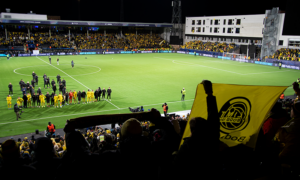
Cuando el árbitro pitó el final, Pep Guardiola, Erling Haaland y compañía salieron del campo cabizbajos, probablemente tan incrédulos como la afición local, que extasiada celebraba a sus héroes una epopeya más. Abrazados, los futbolistas y fanáticos se vitoreaban de cancha a gradas recíprocamente. Esa noche, el Manchester City era el troll. El futbol idealista, utópico, a veces todavía puede ganar.
Tras las conferencias de prensa post partido, el periodista Freddy Toresen de Avisa Nordland, visiblemente conmovido expresó para Balompié: “Esto es un cuento de hadas. Han pasado más de 7 años desde que Bodø/Glimt hizo maravillas en Noruega y cinco temporadas en el escenario europeo. Esta noche será recordada por todos los asistentes a Aspmyra y por toda la ciudad; será una gran anécdota que se contará durante mucho tiempo. Incluso si hubiéramos perdido, la magia sigue ahí; estamos más centrados en el proceso y en cómo llegamos hasta aquí que en los resultados. Un equipo que pertenece a la afición venció a uno de los mejores conjuntos del mundo, que pertenece a una nación-estado. El poder de una comunidad crea algo verdaderamente mágico. La maravilla comenzó en 2019 y aún continúa”.
Como sucede con las auroras boreales, todas las interpretaciones de la historia reciente de Bodø/Glimt son líricas. Quizás sea por la belleza sublime de las coloridas luces, o por los valores que rigen al club nórdico. Quizás, también, porque tantas estrellas tienen que alinearse para que podamos verlas o que anoten un gol.
Bodø dazzles!
A Champions League night. Kasper Høgh wins it back in the middle of the park and flicks it on to Blomberg, who tears up the pitch with spirited determination towards the opposition box. It’s two against two. The crowd is buzzing in the stands, dreaming of the impossible. The clock shows twenty minutes. Khusanov brings the attacker down with a shoulder barge. The yellow number 9 is waiting, alert. Blomberg gets up sharpish and sells a dummy to the left; he floats a cross to the far post. The trajectory stretches the moment—breathless, agonising. Høgh, with zero angle, nods a downward header. The ball slips through the keeper’s legs. Nutmeg! Goal! Just over eight thousand, two hundred souls erupt inside the jam-packed Aspmyra Stadion. Bodø/Glimt are beating Manchester City!
In the absurdity of modern football that prioritises big money and treats fans like disposable customers, there are still romantic tales that enchant us because they defy the system—even if they only rarely conquer the glittering trophies. The spark of FK Bodø/Glimt germinates in the heart of its community and illuminates this port city north of the Arctic Circle.
Monday Afternoon.
“Looks like we might see the Northern Lights in Bodø tonight,” said the Norwegian reporter at the press conference ahead of the penultimate matchday of the Champions League league phase.
“Good!” replied Pep Guardiola, interrupting him with a smile.
“It’s something special and spectacular for many tourists. You said you were in Lofoten?” asked the hack. “Have you seen them before?”
“Yes, in Lofoten and in Finland. I love Northern Europe,” Pep affirmed.
“What do you think about them?” the reporter pressed.
With a playful grin, Pep shot back: “I’m not a scientist to analyse why they appear in the sky, give me a few years… don’t underestimate my knowledge as a scientist, but for now I just admire them. Even better with a glass of wine.”
“Do you have time to appreciate the Northern Lights with a schedule as congested as the Champions League?”
“I’ll be in the hotel; I’ll look through the windows at the sky and enjoy them. I’m very focused on my job, but why not see them and admire the beauty of the universe?” assured the visiting manager.
“It’s the solar wind crashing into the gas in the upper atmosphere. That’s it,” the reporter concluded.
“Ah, really? You’re the scientist,” Guardiola said amidst laughter.
Monday Night. Nature gets it right. The biting winter wind hammered Bodø, as usual, with enough force to chase away the clouds but not to freeze the people. Once darkness embraced the Arctic sky, ribbons of light in ethereal greens, purples, and reds wove together, colouring the night; the Northern Lights danced amongst the stars like a premonition that something special was about to happen.
FK Bodø/Glimt is intrinsically identified with Askeladden (“The Ash Lad”), a character from Norwegian folk tales who did the impossible: he defeated a troll. Today, the concept is understood as the underdog who uses wit, curiosity, and luck to overcome overwhelming challenges. Bodø/Glimt belongs to its supporters, who also stoke the fire on and off the pitch; not long before the fairy tale they’ve been living for a few years, it was they who rattled buckets in the streets or donated fish to save the club from administration.
Monday Night. Many starry-eyed kids ran from the city centre, where Manchester City were staying, to the stadium and back; they were chasing Erling Braut Haaland, the top Norwegian star of the moment, who ironically played in Bodø as a visitor. In 2018, the relentless striker, still a teenager, visited the fishing city with Molde FK. On that occasion, his team won; he scored the only goal of the game.
The club first defied the national idiosyncrasy in the 1960s back when it was normal to insult and discriminate against the “uncivilised” Northern Norwegians, the yellow outfit proved they were just as capable as the southerners. After years of yo-yoing up and down the Norwegian football pyramid, they contended for the Eliteserien (top flight) when not even they believed they could win silverware; they stormed it as champions in four of the last seven seasons. And finally, they challenged the continent, first reaching the semi-finals of the Europa League where they were knocked out by Tottenham Hotspur… The first Norwegian team to reach the semis of a continental competition. And then, competing in the Champions League.
Tuesday, Early Morning. Champions League day. A Nordic ritual turned routine to start the day, especially when it’s a big one. At Pust, a public sauna, some fans completed the ancient cycle between fire and ice: sweating in the heat of the embers to relax the muscles and clear the mind, then a dip in the freezing Arctic Sea to revitalise and focus. The atmosphere in the fishing city felt light, hopeful. Houses and buildings, businesses and restaurants—everyone unfurled their yellow FK Bodø/Glimt flags.
The history of the Berg dynasty is rooted in the contemporary chronicles of Bodø/Glimt, so much so that a statue of Harald “Dutte” Berg adorns the entrance to Aspmyra Stadion, honouring the family’s legacy. It is a story of footballing prowess that breathed life into the city through the ball, but also off the pitch, with their social commitment. “Dutte” Berg began playing when the Arctic side could only compete in regional leagues, as Northern Norwegian teams were barred from the top division. He won the league playing for Lyn in Oslo; he also had a stint at ADO Den Haag in the Netherlands. He returned to Bodø and became one of the heroes of 1975, when Bodø/Glimt lifted the Norwegian Cup. His sons Ørjan, Runar, and Arild also played for the Arctic outfit; Runar even played for free to help the team during a financial crisis in 2009, and later, along with Ørjan, organised a collection to help during another difficult period for the squad. And finally, today Patrick Berg plays—the number 7, scion of Ørjan, is one of the club captains. All of them internationals.
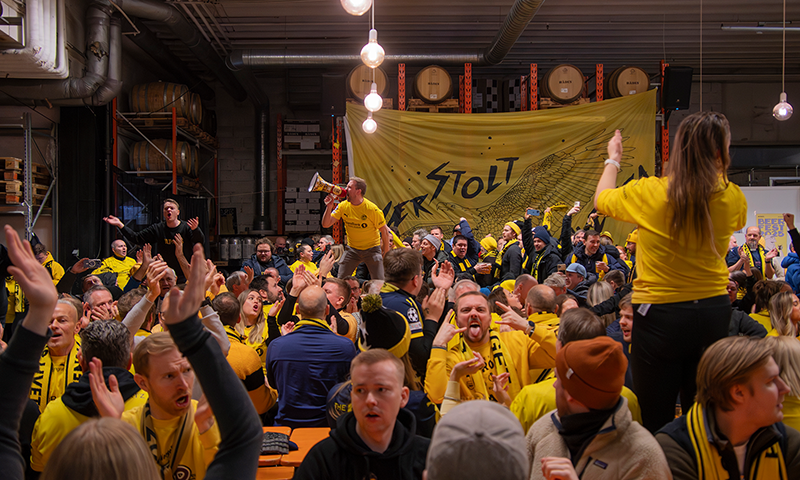
Tuesday, Pre-match. The Bådin Brewery opened early, as is customary whenever Bodø/Glimt plays a match. There, on the street on the way to the ground, or in Section J of the Aspmyra Stadium, you can see Frank Tjærandsen leading the piercing chants of the “Yellow Horde”. Clad in the traditional yellow jersey with a pint in hand, and with the roar of the fans in the pub as a backdrop, he told Balompié: “We are a small town, we all know each other, the community is close-knit. I hate the part of the Champions League that is just about money, money, and more money; but I love being part of a competition where the biggest teams in the world participate, measuring ourselves to see how good we are. Football in 2026, nah… I like football, not the money. If I had grown up in Manchester, I’d still wish to be a Bodø/Glimt fan because this is real, it’s not plastic money from the Emirates, this is something we built from the foundations. It’s passion, it’s everything football should be; not a vulgar way to reach the summit.”
The largest solar radiation storm in over 20 years painted the sky in colours the night before the game, but the magical sparks started long before that: first came Bjørn Mannsverk in 2017, a former Royal Norwegian Air Force squadron leader who absolutely changed the team’s philosophy. The approach includes mental training without stigma, meditation before training, group meetings, and individual sessions; winning or losing no longer matters, it’s about the process. Then, in 2018, came manager Kjetil Knutsen, who bases much of his work on looking only at the next match. Adaptability, resilience, teamwork.
Champions League Night. Twenty-three minutes in. In the stands of Aspmyra Stadion, the deafening bedlam for the first goal hasn’t ceased; on the pitch, the shell-shocked visitors can’t string passes together. Patrick Berg hoofs the ball up to the halfway line. Alleyne tries to control it with his chest, but Hauge appears out of nowhere and nicks the ball. The Bodø/Glimt attacking trident breaks quickly towards the opposition goal. The fans rise from their seats. Hauge passes to Blomberg who receives it on the edge of the box; Høgh raises his arms, letting them know he’s unmarked. Khusanov slides in desperately trying to block the cross. The ball bounces nervously by the penalty spot… Høgh rifles it into the left corner. Two-nil! Goal! The black and yellow scarves adorn the frantic revelry like streamers. Thousands of fanatics look at each other in ecstasy, in disbelief.
Action Now. The paradigm of collective power. It is probably Bodø/Glimt’s most important magical spark. The Champions League is an elegant excuse to talk about what really matters: sport as a booster for the community and nature. The Action Now sustainability programme has been, since 2019, the club’s commitment to positive social development and actions that generate pride. Benedicte Halvorsen, Head of the Development Department at Bodø/Glimt, spoke with Balompié before the game: “It all started when our CEO and our chairman were at a business breakfast. There was a man there telling the history of the world, how things were going—some very well and others, of course, not so much. The man said that if you want to achieve positive change, sport is the place where you can start, as it is the largest grassroots organisation in the world. They felt very inspired by this and started working immediately.”
“Which Action Now results stand out most?”
“In the eight years we’ve been working on this, a lot of progress has been made. We’ve connected our partners to create more sustainable projects together. We try to focus holistically on the whole club. For example, we have renewable heating for our pitch, and we also encourage the youngsters in our academy to carry out different actions each year, like cleaning beaches or learning about technology.”
“How do the fans get involved with Action Now?”
“Our fans are proud of our actions. We have different street football teams. We have a team for people who have had addictions and have overcome them, and who also collaborate with prisons for their rehabilitation. The team is called Glimtvis, and when Bodø/Glimt played the Cup final, we organised a parallel street football final and, of course, the fans turned up to support them.”
“This season’s away kit, the one the team used in Germany when they faced Borussia Dortmund, is inspired by Svartisen, the largest Norwegian glacier. What’s special about it?” “Its main objective is to raise awareness about climate change and its impact on the world around us, not just on a global scale, but also locally. The way we use our kits is something that has been with us for a long time; in all of them, we use the best materials available, completely recycled. In the domestic league, all our partners replaced their logos with the Sustainable Development Goals they chose. We have several different ones.”
Tuesday Afternoon. The awaited moment arrived. The Champions League anthem resonated in Bodø, but not in the stadium—it was on the pitch of the Nordlandshallen, an indoor sports complex, for a friendly street football match. In the stands, there were a couple of hundred people. Glimtvis hosted Bryne FK, the team where Erling Haaland came through the ranks; it was he who footed the bill for his team to travel to the Arctic Circle. Watching from the sidelines were Lise Klaveness, President of the Norwegian Football Federation, and Ørjan Berg, who works for Action Now. “They are players with some challenges in life, and football is magic. It really helps people get off the streets and back to work, guiding them in life. So we just try to do good things in the community.”
Champions League Night. Second half. An exceptional save stops Manchester City from conceding another. The clock marches on, minute fifty-one. Rodri loses the ball and Evjen intercepts in midfield. Hauge receives the ball on the wing and eagerly drives towards the middle. A dummy, and he twists Rodri inside out. He approaches the D at speed; barely giving the fans time to react. Hauge shoots. The ball curls, orbiting until it embeds itself, immaculate, in the top left bins. A screamer! Total madness in the stands.
An adventure absolutely out of the ordinary. The Aspmyra Stadion, still sheltered by a shimmering aurora borealis, bore witness to an epic feat. The contrast is as romantic as it is surreal between Bodø/Glimt, which belongs to its people, and Manchester City, which belongs to a nation-state. The entire population of the fishing city could fit inside the English team’s stadium… €57.78 million is the total value of the Norwegian squad; in contrast, the Mancunians shelled out €55 million on Marc Guéhi alone, their latest acquisition. However, passion and a sense of community cannot be bought, much less the miraculous aura. In 2021, Bodø/Glimt humiliated José Mourinho’s Roma 6-1 in one of the worst defeats of his career; five years later, they took down Guardiola.
When the referee blew the final whistle, Pep Guardiola, Erling Haaland and company walked off the pitch heads down, probably as incredulous as the local fans, who were ecstatically celebrating another epic with their heroes. Arms around each other, the players cheered from the pitch to the stands, reciprocal and united. Idealistic, utopian football can sometimes still win.
After the post-match press conferences, journalist Freddy Toresen from Avisa Nordland, visibly moved, expressed to Balompié: “This is a fairy tale. It’s been over 7 years since Bodø/Glimt worked wonders in Norway and five seasons on the European stage. This night will be remembered by everyone attending Aspmyra and by the whole city; it will be a great anecdote told for a long time. Even if we had lost, the magic is still there; we are more focused on the process and how we got here than on the results. A team that belongs to the fans beat one of the best sides in the world, which belongs to a nation-state. The power of a community creates something truly magical. The wonder began in 2019 and still continues.”
As with the Northern Lights, all interpretations of Bodø/Glimt’s recent history are lyrical. Perhaps it is because of the sublime beauty of the colourful lights, or because of the values that govern the Nordic club. Perhaps, also, because so many stars must align for us to see them, or for them to score a goal.
Shalalalala – lalalalala
Shalalalala – lalalalala
Orgullo del norte de Noruega – shalalala
Orgullo del norte de Noruega – shalalala
Shalalalala – lalalalala
Shalalalala – lalalalala
Nord-Norges stolthet – shalalala
Norges stolthet – shalalala
Shalalalala – lalalalala
Shalalalala – lalalalala
The pride of Northern Norway – shalalala
The pride of Northern Norway – shalalala
Recomendaciones para tu visita a Bodø:
- Actividades:
- Rampen: Aventuras en la naturaleza del ártico noruego: Snowshoeing (caminata con raquetas de nieve), recorridos en motonieve, rapel, tour en bote por Salstraumen (pequeño estrecho conocido por tener la corriente de marea más fuerte del mundo o el afamado Safari Auroras Boreales.
- Dirección: Rampen Adventure Hub, Sjøgata 41, Bodø, Noruega
- Contacto: +47 75 57 74 77 / hello@ rampen
- Web: https://www.rampen.com/en
- Hospedaje: Scandic Havet, ubicado en el centro de la ciudad, a unos metros del muelle.
- Dirección: Tollbugaten 5, Bodø, Noruega
- Contacto: +47 75 50 38 00 / [email protected]
- Web: https://scandichotels.com/
- Oficinas de turismo:
- Visit Bodø – visitbodo.com
- Instagram, TikTok and LinkedIn: @visitbodo
- Facebook: Visit Bodø
- Northern Norway Tourist Board – https://nordnorge.com/
- Instagram: @northernnorway
- Facebook: Visit Northern Norway
- Action Now: https://www.actionnow.no/
- Visit Bodø – visitbodo.com
- Rampen: Aventuras en la naturaleza del ártico noruego: Snowshoeing (caminata con raquetas de nieve), recorridos en motonieve, rapel, tour en bote por Salstraumen (pequeño estrecho conocido por tener la corriente de marea más fuerte del mundo o el afamado Safari Auroras Boreales.
Nota: Esta cobertura fue posible gracias al apoyo de Visit Bodø, Northern Norway Tourist Board y Rampen Tours.
- Activities:
- Rampen: Adventures in the Norwegian Arctic: Snowshoeing, snowmobile tours, abseiling, boat tours through Salstraumen (a small strait known for having the strongest tidal current in the world), or the famous Northern Lights Safari.
- Dirección: Rampen Adventure Hub, Sjøgata 41, Bodø, Noruega
- Contacto: +47 75 57 74 77 / hello@ rampen
- Web: https://www.rampen.com/en
- Hospedaje: Scandic Havet, located in the city center, a few meters from the pier.
- Dirección: Tollbugaten 5, Bodø, Noruega
- Contacto: +47 75 50 38 00 / [email protected]
- Web: https://scandichotels.com/
- Oficinas de turismo:
- Visit Bodø – visitbodo.com
- Instagram, TikTok and LinkedIn: @visitbodo
- Facebook: Visit Bodø
- Northern Norway Tourist Board – https://nordnorge.com/
- Instagram: @northernnorway
- Facebook: Visit Northern Norway
- Action Now: https://www.actionnow.no/
- Visit Bodø – visitbodo.com
- Rampen: Adventures in the Norwegian Arctic: Snowshoeing, snowmobile tours, abseiling, boat tours through Salstraumen (a small strait known for having the strongest tidal current in the world), or the famous Northern Lights Safari.
Note: This coverage was made possible with the support of Visit Bodø, Northern Norway Tourist Board and Rampen Tours.
El Celtic es realmente bueno
¿Quién se interpondrá en su camino?
Bodø/Glimt es el más grande del norte.
Celtic vakke nåkka go
Kem skal liksom stå i veien
Bodø/Glimt e størst i Nord
We have been plundering Rome
Celtic is beautiful now go
Kem is supposed to be in the way.
Bodø/Glimt is the largest in the North